Table of contents
Editor’s Message
Steve Elias, MD
Welcoming Mark Iafrati, MD as President of the American Venous Forum
Allison DeGroff; Director of Strategic Initiatives
Leading Through Service: The Value of AVF Volunteers
John Forbes, MBA; Chief Executive Officer
AVF Physician in Training Program a Win
Robert Attaran, MD; Chair, Early Career Committee
Superficial Session I: Energy, Innovation, and Impact in Venous Care
Juan Carlos Jimenez, MD; Member, Newsletter Committee
Multi-society Collaboration on Display at AVF 2026
Mikel Sadek, MD; Chair, AVF Communications Council
Where Innovation Meets Conversation: Highlights from the Case
Competition & Happy Hour
Juan Carlos Jimenez MD, MBA; Member, Newsletter Committee
Poster Session at AVF 2026 Showcases Scientific Excellence — and a
Successful New Format
Sheila Blumberg, MD; Member, Newsletter Committee
The Venous CommUNITY Committee (VCC) Session at the AVF 2026
Karem Harth, MD; Past Chair, Venous CommUNITY Committee
Lymphedema a Focus at AVF 2026
Anil Hingorani, MD; Chair, Venous CommUNITY Committee
Highlights from Scientific Session IV: Superficial Venous II
Emelia Bittenbinder, MD; Member, Newsletter Committee
What Would You Do? Highlights from the Doctor’s Lounge: Vulvar
Varices
Emelia Bittenbinder, MD; Member, Newsletter Committee
Recognitions and Awards Presented at AVF 2026
Amy Murrin; Associate Director
International Session at AVF 2026
Rashad Bishara, MD; Chair, International Committee
AVF 2026 Explored Diagnostic Imaging
Eric Hager, MD; Member, Newsletter Committee
Venous Thromboembolism and IVC Filter Session at AVF 2026
Arjun Jayaraj, MD; Chair, Education Council
Paola Ortiz, MD; AVF 2026 Speaker
Julianne Stoughton, MD; Past Chair, Program Committee
The AVF Upper Extremity DVT Guideline: A Practical Playbook for a
Growing, Under-standardized Problem
Rafael Demarchi Malgor, MD, MBA; On behalf of the AVF Guidelines Oversight Committee
Advancing Care in Pelvic Venous Disease: Join AVF in Chicago This
June
Arjun Jayaraj, MD; Co-Chair, PeVD Summit Planning Committee
John White, MD; Co-Chair, PeVD Summit Planning Committee
Past President Spotlight: Joseph Caprini, MD, MS, FACS, RVT, DFSVS
Parker Ball, MD; AVF Communications Intern
EDITOR-IN-CHIEF
Steve Elias, MD
EXECUTIVE EDITOR
John Forbes, MBA
MANAGING EDITOR
Allison DeGroff
COVER ARTIST
Christine Rataj
PUBLICATION DESIGNER
Anthony Eaves
Editor’s Letter
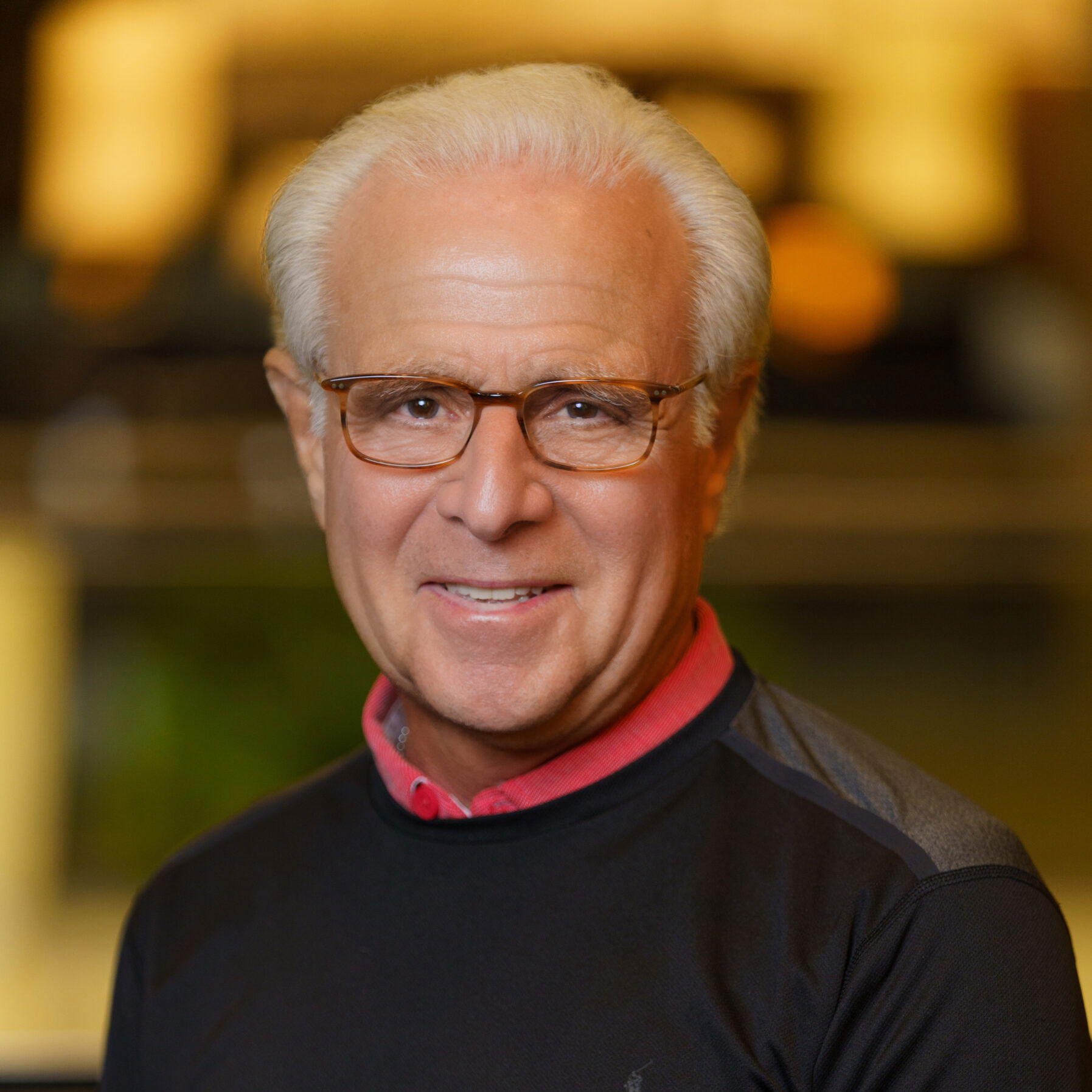
Steve Elias, MD
Editor-In-Chief
Vein Specialist
Ferry Beer and False Aspirations
Having a drink is not so much about the drink as much as it is about the where and when of the drink. What’s more satisfying? A drink while staring at the azure ocean or a drink while sitting in your room staring at your closet door? The former mayor of New York Michael Bloomberg, the billionaire, felt that a good first date was a free ride on the Staten Island Ferry having a “ferry beer” with that special person. The man could easily buy the boat, the beer, and anything else he desired in New York harbor. Recently the headline “The Bar Is Open Again on the Staten Island Ferry” appeared in the New York Times. It hadn’t been offered since 2019 for many reasons. But not for lack of demand.
It is a 25-minute, 5-mile boat ride from lower Manhattan to Staten Island. Depending on which way you face, you can see the sun glinting off the buildings in New York City; you can observe the Statue of Liberty and Ellis Island or the lovely isle of Staten Island. The experience is free and moving. I would travel for fun on the ferries with my friends in high school. We’d drive from Long Island to experience the free ride and enjoy every view and a beer. An unbelievable bargain.
And Vein Specialist is also an unbelievable bargain. We don’t serve alcohol, but you can always bring your own. This issue gives you a free ride spanning our entire annual meeting. Most of our contributors acted as “roving reporters” at the meeting to cover what happened at all of the sessions. This issue brings you their impressions about what was discussed and what important topics were covered. A lot happened at our meeting,,and it was one of the best we have had from a content viewpoint. Members of the Newsletter Committee and others captured the spirit of the meeting. If you were at the meeting– or if you were not at the meeting– read each one of their articles to get a flavor of what happened. They will also help you understand who and what the AVF is. The word forum is in our name and the intent of our founders was that this should be a place to discuss ideas about vein disease and how we can best manage it. This meeting stuck to some of those principles. It also helps you understand what we are trying to be as an organization.
But others are trying to be something else aside from who they really are. Some people want to appear wealthy, polished, and old-moneyed knowing that they will never be wealthy, polished, and old-moneyed. Why? Fantasy, upward mobility, overcompensation, or social pressure? It seems that Gen Z is really into this. There are social platforms and websites dedicated to this goal: Fresh and Classy, Carving Pierre, and Old Money are a few of these. They are not only about appearances. Some do discuss how to present yourself as a wealthy individual or how to speak with people and what to say to sound rich and famous. Old Money Secrets, a social media account, educates you in “old money matters.” But can one really learn how to appear wealthy? Isn’t it better just to be born into it? Or isn’t it better just to be yourself? If you try too hard, you run the risk of becoming a caricature of old money and not the real thing. Pretend reality.
Our meeting was anything but pretend reality. It was real. We are for the real vein specialists who want to be themselves and offer high quality care. We are comfortable being ourselves and, in fact, enjoy it. We don’t aspire to be anything else. Being a member suits us just fine. So be like Michael Bloomberg, who is wealthy but doesn’t try too hard. Dress up appropriately and drink up appropriately as you read this issue of Vein Specialist. Be yourself.
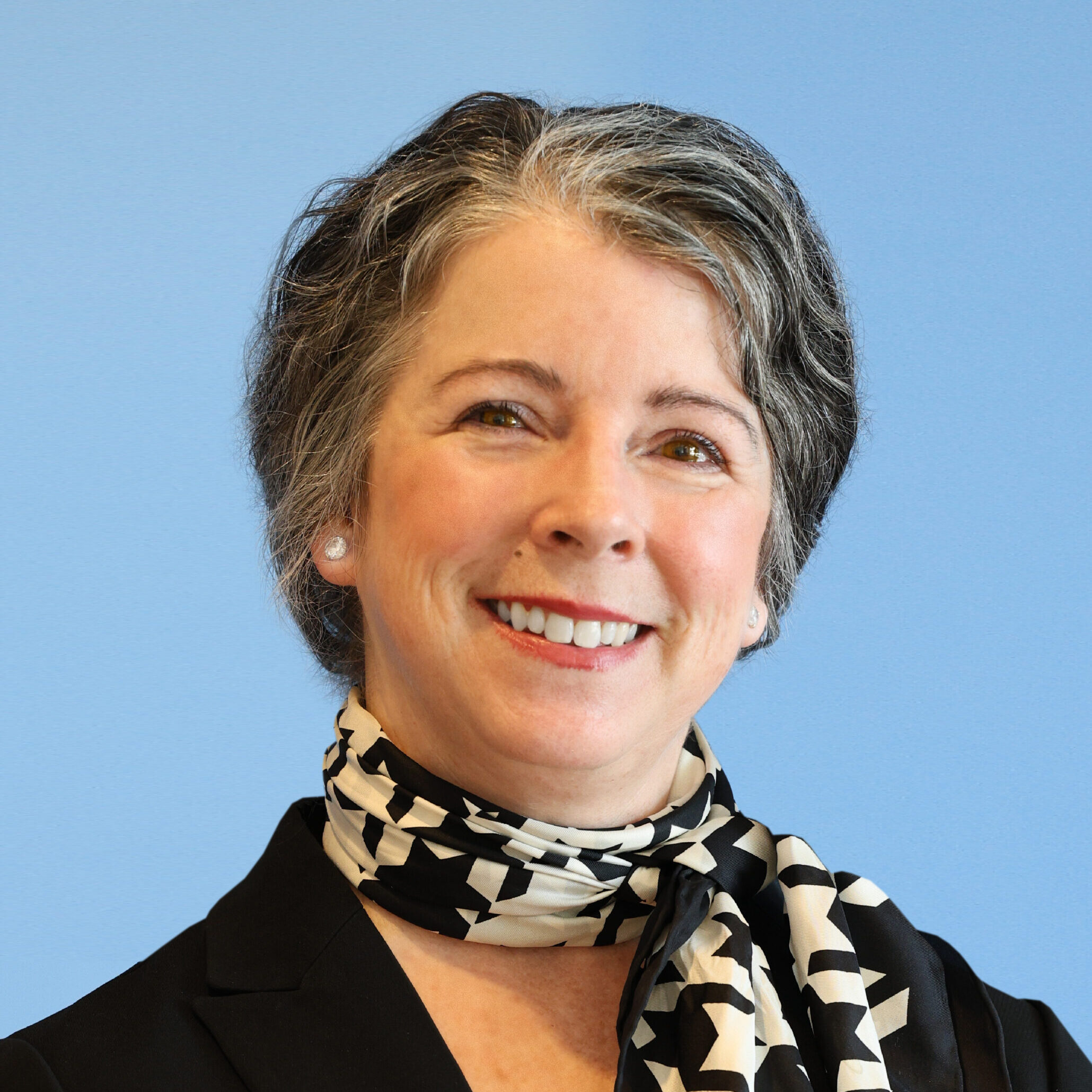
Welcoming Mark Iafrati, MD as President of the American Venous Forum
Allison DeGroff
Director of Strategic Initiatives
The American Venous Forum (AVF) is proud to welcome Mark Iafrati, MD as its new President. A highly respected vascular surgeon and long-standing contributor to the venous and lymphatic field, Dr Iafrati brings a wealth of clinical expertise, academic leadership, and a deep commitment to advancing patient care.
Dr Iafrati has built a distinguished career grounded in both academic medicine and clinical innovation. Over the years, he has held key leadership roles within major academic institutions, where he has contributed to the training of future vascular specialists and the advancement of evidence-based venous care. His work has spanned complex venous disease management, clinical research, and multidisciplinary collaboration—areas that continue to shape the evolving landscape of venous and lymphatic medicine.
Now based at Vanderbilt University Medical Center in Tennessee, D. Iafrati is actively engaged in delivering high-quality, patient-centered care while remaining closely connected to national and international efforts to improve outcomes in venous disease. His current work reflects a balance of clinical excellence and strategic vision, with a focus on expanding access to care, integrating new technologies, and fostering collaboration across specialties.
A dedicated member of AVF for many years, Dr Iafrati has contributed extensively through committee leadership, educational programming, and mentorship initiatives. His longstanding involvement has helped strengthen the organization’s mission to improve care for patients with venous and lymphatic disease through education, research, and advocacy.
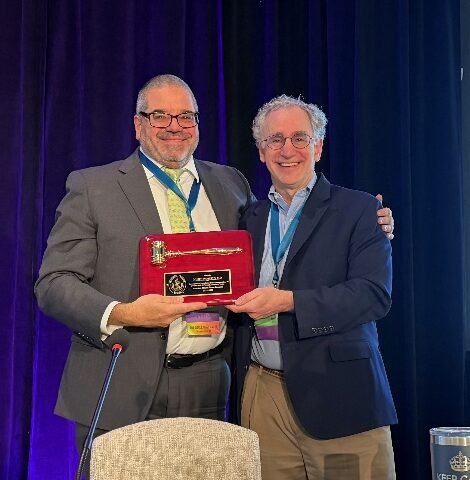
As President, Dr Iafrati is poised to guide AVF into its next phase of growth—building on its strong foundation while embracing innovation and global engagement. His leadership will continue to elevate AVF’s role as a leading voice in venous and lymphatic health. Dr Iafrati’s inaugural address outlined his vision for the upcoming year. It focused on themes of inclusivity, AVF’s core mission of research, and the importance of balancing both the scientific and clinical perspectives as the organization works to advance care for patients with venous and lymphatic disease.
The AVF community looks forward to the impact of Dr Iafrati’s presidency and the continued advancement of the field under his guidance.
Leading Through Service: The Value of AVF Volunteers
John Forbes, MBA
Chief Executive Officer
The strength of the American Venous Forum lies not only in its scientific excellence, but in the extraordinary commitment of its volunteers. Each year, AVF committee members dedicate thousands of hours to advancing education, research, and collaboration across the venous and lymphatic community. In 2025–26 alone, more than 190 volunteers contributed 15,000-plus hours across 20 committees and more than 100 meetings—an investment of time and expertise that directly elevates the impact of the organization.
These contributions are far more than administrative support—they are the driving force behind AVF’s programs, publications, guidelines, and educational initiatives. Volunteers shape the future of venous care by developing content, mentoring emerging clinicians, and ensuring that AVF remains a trusted leader in the field.
As Helen Dyer once said, “Volunteers do not necessarily have the time; they just have the heart.” This spirit is evident in every committee meeting, every initiative launched, and every advancement made possible through collective effort.
We extend our sincere gratitude to the dedicated volunteers who served over the past year. Your commitment has strengthened the AVF community and advanced patient care in meaningful ways. Your work does not go unnoticed—it is foundational to everything we achieve.
Looking ahead, we are equally inspired by the volunteers who will serve in the coming year. With fresh perspectives and continued dedication, this next group will build upon a strong legacy and help shape the future of venous and lymphatic care.
Together, through volunteerism, the AVF continues to thrive—driven by passion, purpose, and a shared commitment to excellence.
AVF Physician in Training Program a Win
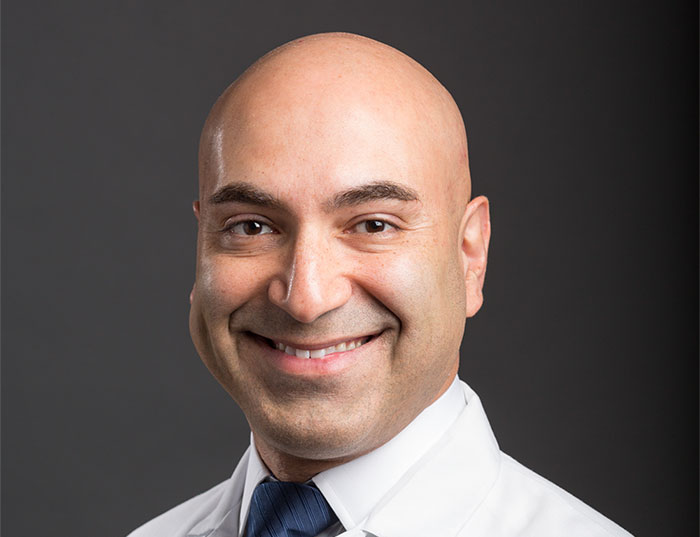
Robert R. Attaran, MD
Chair, Early Career Committee
Not everyone reading this will know the name Spud Webb. Spud was a basketball player. Only, he stood a mere 5’7” tall. He had once been cut from his varsity team for being too short. College teams frequently overlooked him. Eventually though, Spud made it to the NBA where he played for 12 seasons. But what stood the 5’7” Spud Webb apart the most, was his jump. You see, Spud could dunk. He had a reported vertical leap of 42 inches. Remarkably, in 1986 Spud Webb was crowned the NBA Slam Dunk contest champion by defeating the defending champion, Dominique Wilkins, who stood at 6’8”.
To me, the AVF is just like Spud Webb: small but mighty. Notwithstanding its relatively modest membership of around 1,000 members, the organization leads in the field of venous and lymphatic medicine, generates an impressive number of guidelines, and moves the field forward. The AVF has numerous committees that oversee a number of important functions. The annual meetings are attended by leaders from the world over.
Among the AVF’s many thriving committees is the Early Career Committee (ECC). Recognizing the importance of training future generations of venous and lymphatic medicine (VLM) practitioners, the ECC holds annual courses every September (most recently in Chicago), as well as during the annual meetings.
This year, the physician-in-training sessions were held over a 2-day period in Denver, with some sessions also including advanced practice providers. Day 1 kicked off with live patient demonstrations where attendees could evaluate and examine patients with suspected venous disease before the patients underwent live ultrasound. As in past years, Dr Steven Elias moderated the session with his usual mastery.
Later in the afternoon, ECC members gave interactive presentations featuring superficial, deep, combined, and pelvic venous disease as well as wounds.
Day 2 began with case presentations featuring industry technology, including Sun Scientific, Tactile Medical, Argon, Boston Scientific, and Angiodynamics. The speakers, who were all current or past ECC faculty, used case review to showcase today’s devices and technologies.
The industry hands-on sessions followed, which provided an opportunity for the attendees to examine numerous devices, including thrombectomy systems, simulators, compression, and imaging modalities, up close.
Nearly 50 trainees attended the sessions. Many remained for the annual meeting, and some presented their work at the poster sessions. It was another slam dunk year for the mighty AVF.
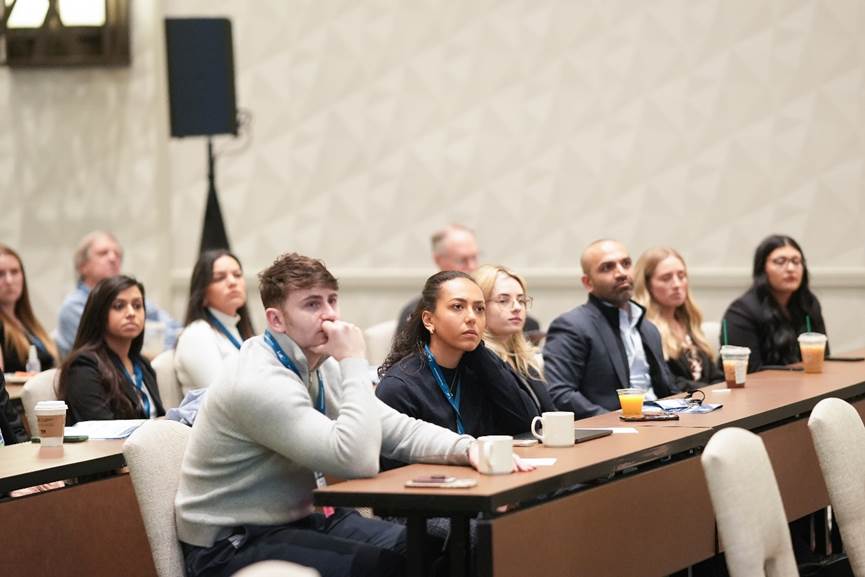
Attendees at the Physicians-in-Training course.
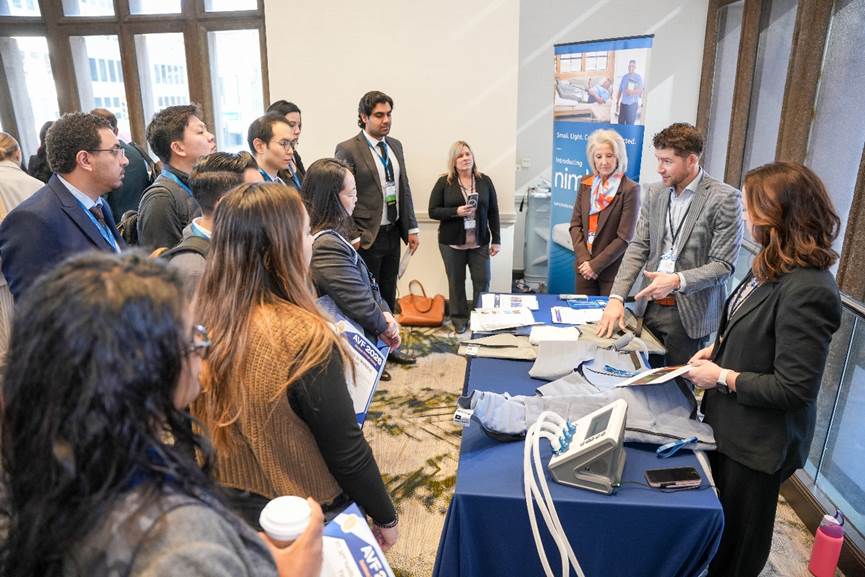
Attendees participating in a hands-on demonstration with industry.
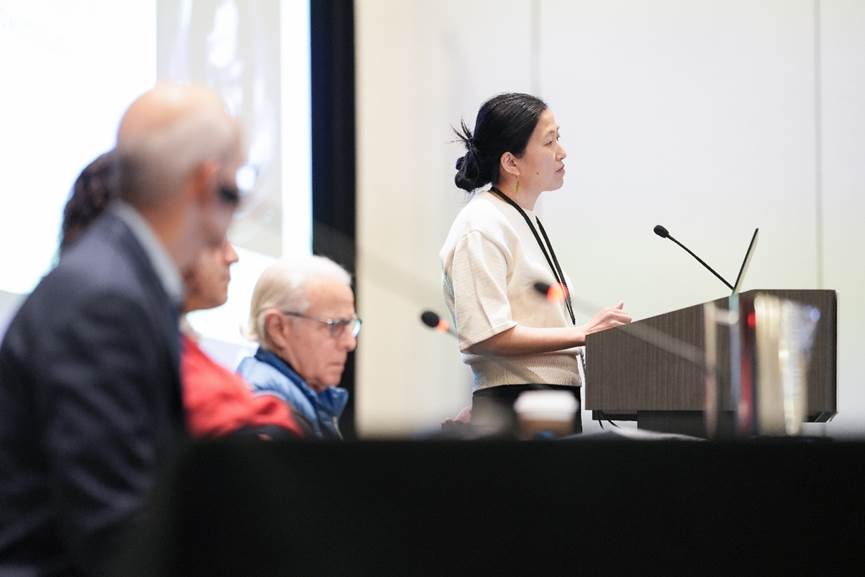
Dr Misaki Kiguchi presenting at the Physician-in-Training course.
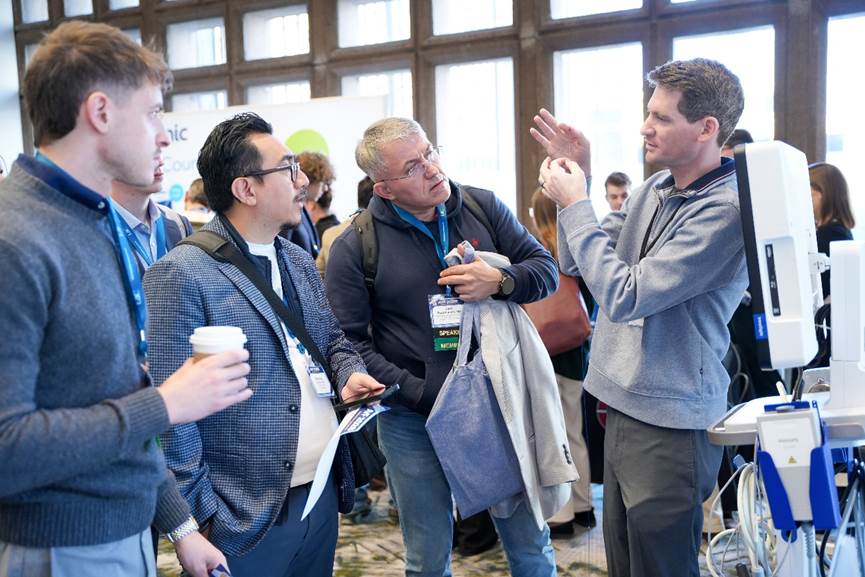
Attendees participating in a hands-on demonstration with industry.
Superficial Session I: Energy, Innovation, and Impact in Venous Care
Juan Carlos Jimenez, MD
Member, Newsletter Committee
Superficial Session I set a dynamic tone for Sunday afternoon, delivering a fast-paced and highly engaging series of plenary presentations that sparked thoughtful discussion and showcased the evolving landscape of superficial venous disease management. Dr Joseph Raffetto, President of the American Venous Forum, opened the session alongside Program Chairs Drs. Misaki Kiguchi and Julianne Stoughton, welcoming attendees and setting the stage for an outstanding scientific program. The session was moderated by Leigh Ann O’Banion, MD, Juan Carlos Jimenez MD, MBA, and Kathleen Oszvath MD.
Dr Joseph Hart of the Medical College of Wisconsin launched the session with a compelling presentation on the impact of social vulnerability on both short- and long-term outcomes in patients with de novo venous leg ulcers (VLU). His work ignited a lively and important discussion on how best to define and measure socioeconomic deprivation in venous care.
Momentum continued with Dr Scott Levy of the University of Michigan, who presented reassuring data demonstrating that patients across a wide spectrum of body mass index values (BMI) experience meaningful improvement following endovenous ablation. Ankita Katukota, a second-year medical student from the University of Florida, followed with an impressive analysis of Vascular Quality Initiative (VQI) data, highlighting slightly improved outcomes with non-thermal ablation techniques. Dr Leigh Ann O’Banion added sharp and insightful commentary, emphasizing the critical need to strengthen quality-of-life endpoints in future research.
Representing the University of California, Los Angeles, fourth-year medical student Tristan Bennet—recently matched into vascular surgery residency at the University of Texas, San Antonio—delivered a standout presentation proposing updated reporting standards for ablation related thrombus extension (ARTE) across emerging treatment modalities. His work prompted an animated discussion led by Dr Alun Davies, as the audience explored the implications for standardization and patient safety.
The session’s global perspective was further enriched by Dr Roman Lunin of Latvia,, who presented noveldata supporting the feasibility and effectiveness of advanced flush endovenous laser ablation for groin recurrences. Dr Robert Attaran from Yale University followed with a thought-provoking study demonstrating that higher BMI is associated with significantly elevated great saphenous vein (GSV) pressures, measured using a cutting-edge transdermal pressure transducer.
Closing the session on a high note, Dr Rashad Bishara, President of the Egypt and Africa Venous Lymphatic Association, presented long-term results from a randomized trial evaluating adjuvant ultrasound-guided peri-ulcer therapy. His findings are poised to meaningfully influence contemporary treatment strategies for venous leg ulcers.
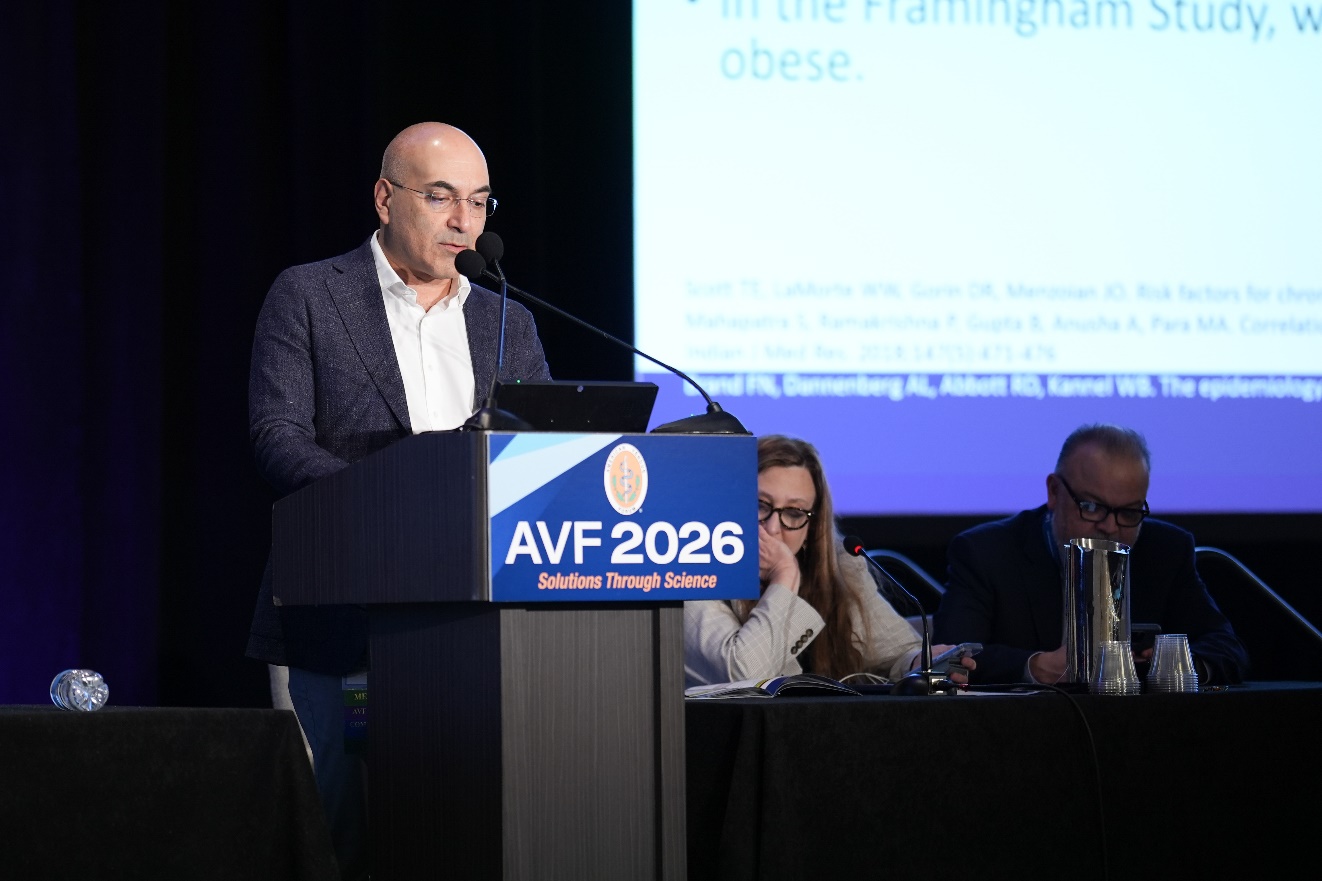
Dr Robert Attaran presenting during the Superficial Session I at AVF2026.
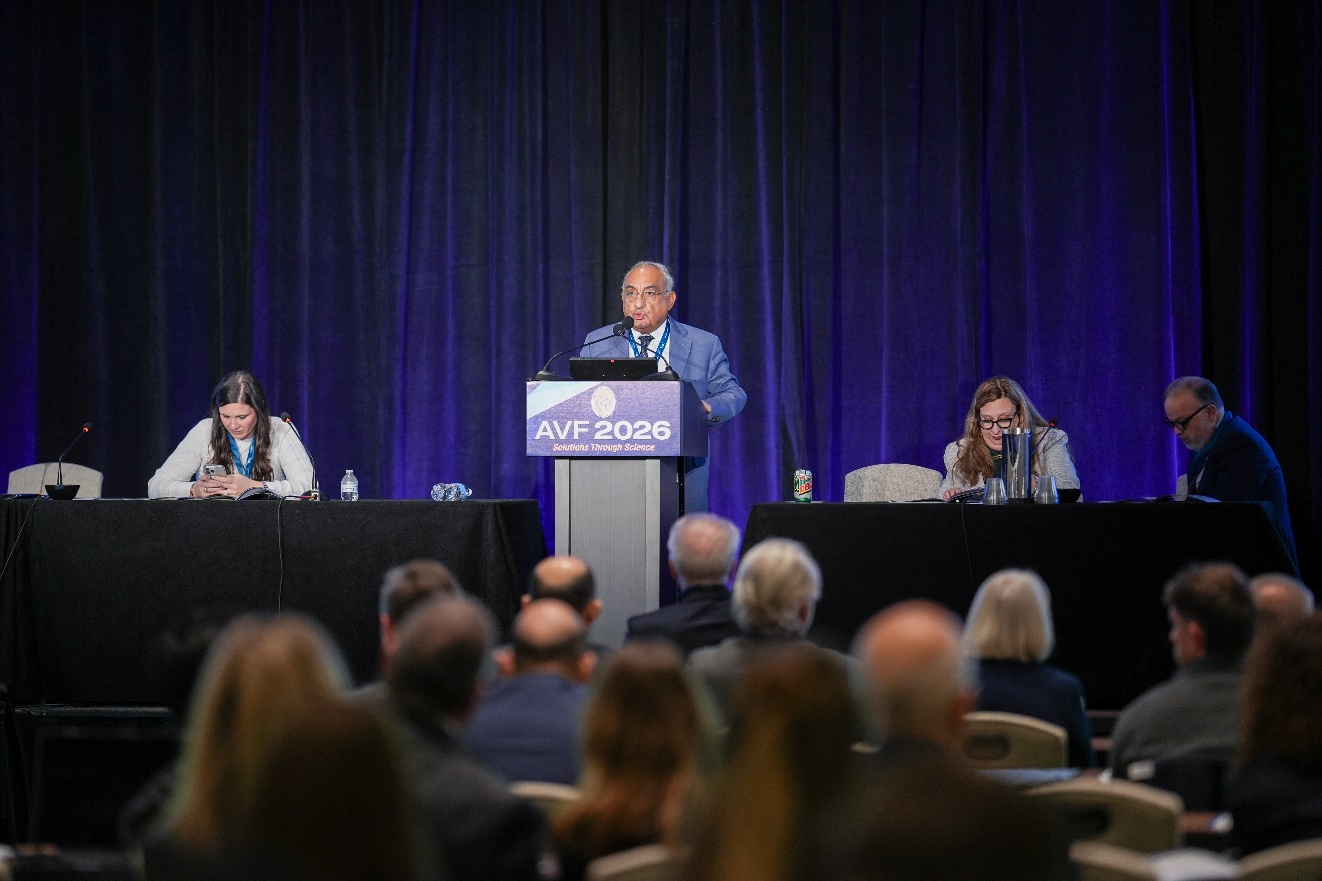
Dr Rashad Bishara presenting during the Superficial Session I at AVF2026.
