Highlights from Scientific Session IV: Superficial Venous II
Emelia Bittenbinder, MD
Member, Newsletter Committee
Scientific Session IV at the 2026 AVF Annual Meeting in Denver delivered a focused look at evolving best practices in superficial venous disease. Six presentations stood out for their immediate clinical relevance.
A living network meta-analysis of PEM (Varithena™) versus thermal ablation — drawing on 24 publications and roughly 245,000 patients — confirmed that PEM is not significantly different from RFA or laser for venous closure from 3 months through 6 years, while demonstrating clear superiority over physician-compounded foam. DVT risk was equivalent across modalities.
For C2 disease, a comparative study found that patient satisfaction is equivalent whether concomitant phlebectomy is maximal or minimal — supporting a tailored, patient-centered approach rather than a one-size-fits-all protocol.
A post-ablation compression study challenged current guideline recommendations: after 24 hours of mandatory compression and thorough patient education, 78% of patients elected not to continue stocking use, with no significant difference in pain outcomes at one week or one month.
Other notable highlights included a Japanese single-center series demonstrating the safety and efficacy of percutaneous EVLA of tributary varicosities using a slim radial fiber; early data favoring the 1940 nm laser over 1470 nm for total EVLA tributary closure; and a retrospective confirming that thermal ablation can be safely performed in selected patients with underlying iliac venous disease.
Collectively, the session reinforced a theme central to modern phlebology: individualized, evidence-driven care consistently outperforms rigid protocols — for both patient satisfaction and clinical outcomes.
What Would You Do? Highlights from the Doctor’s Lounge: Vulvar Varices
Emelia Bittenbinder, MD
Member, Newsletter Committee
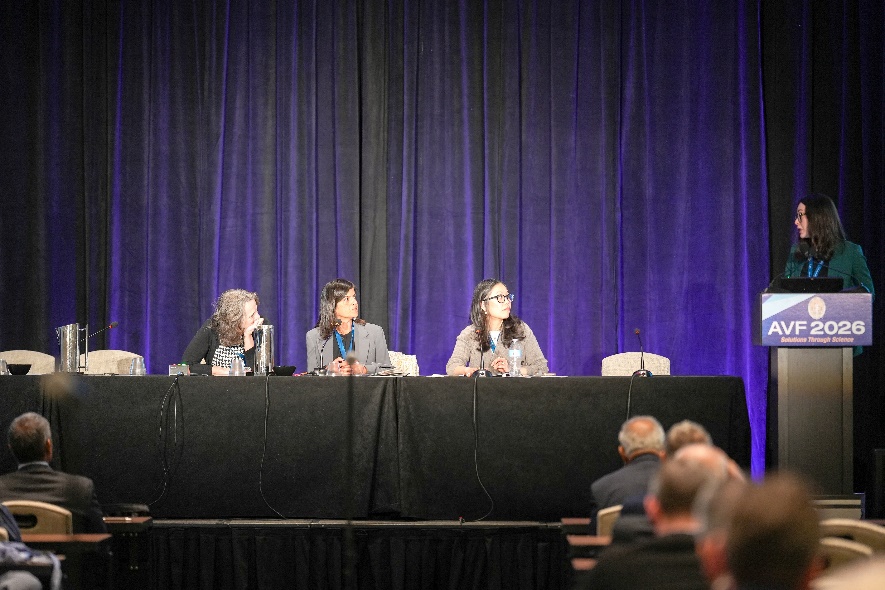
The Doctor’s Lounge format — an interactive “what-would-you-do?” case discussion — is one of the AVF’s most engaging educational offerings, and Session 1 did not disappoint. The case: a 36-year-old G6 woman with bilateral vulvar varices, left inner thigh varicosities, aching and throbbing pain worse at end of day and after intercourse, and no pelvic symptoms. She is planning additional pregnancies.
The opening consensus was unambiguous: you cannot treat what you do not understand. Standing duplex ultrasound to identify escape points is the essential first step: escape point anatomy dictates both procedural positioning and long-term success. Transvaginal ultrasound offers a higher-frequency, more detailed view of pelvic structures, while transabdominal imaging provides broader anatomic context; the ideal approach depends on availability, body habitus, and institutional resources.
Because this patient has no pelvic symptoms, cross-sectional pelvic imaging is not required initially as treatment will be local. However, her high parity and bilateral presentation generated debate about whether significant iliac stenosis should be excluded before proceeding. Opinion was divided, with most participants favoring comprehensive anatomic mapping given her recurrence risk and future pregnancy plans.
For the procedure itself, fluoroscopy-guided foam sclerotherapy using 3% STS (up to 10–12 mL to reach pelvic escape points) emerged as the preferred approach for those building experience, as fluoroscopy teaches anatomy and provides real-time feedback on foam distribution. Ultrasound-guided treatment is equally valid for those confident in the anatomy. Patients should be counseled to expect 50–75% improvement, not complete resolution.
Recognitions and Awards Presented at AVF 2026

Amy Murin
Associate Director
The American Venous Forum proudly recognizes the outstanding achievements, leadership, and contributions of its members and colleagues through a distinguished series of annual awards. Presented during the Annual Meeting, these honors celebrate excellence in research, clinical innovation, education, and service to the venous and lymphatic community.
Each award reflects the AVF’s commitment to advancing the field and improving patient care through collaboration, discovery, and professional dedication. The recipients represent a diverse and accomplished group whose work continues to shape the future of venous and lymphatic medicine.
We extend our sincere congratulations to all awardees for their exceptional accomplishments and meaningful contributions to the specialty.
Award Recipients:
Best Poster
Kerry Pullano and Stephanie Paz
Best Abstract
Eniko Pomozi, MD
2nd Place Poster
Vritika Ravisangar
2nd Place Abstract
Hind Anan, MD
Distinguished Fellow Certificates
Robert R. Attaran, MD
Karem Harth, MD
Harry Ma, MD
Arjun Jayaraj, MD
Outgoing AVF President (2025–2026)
Joseph Raffetto, MD
Incoming President
Mark D. Iafrati, MD
Eugene Strandness, Jr., MD Lecturer (2026)
Sarah Onida, MD
2026 AVF-BSCI Translational Research Grant
Matthew Tan, MBBS PhD MRCS
2026 AVF-JOBST Clinical Research Grant
Anand Athavale, MD
2026 AVF Basic Science Research Grant
Fakiha Siddiqui, BDS, PhD
2026 AVF-Juzo Traveling Fellowship
Karem Harth, MD
Jake Hemingway, MD
Founders’ Award
Peter Pappas, MD
Mark Meissner, MD
Monika Gloviczki, MD
AVF Case Competition – 1st Place
Langford Green
AVF Case Competition – 2nd Place
Yushi Suzuki
Outgoing Board Member
Ruth Bush, MD
Jorge Ulloa, MD
Presidential Citations
Thomas F. O’Donnell, MD
Alisha Oropallo, MD
Rashad Bishara, MD
Robert R. Attaran, MD
Rafael Malgor, MD
Juzo
International Session at AVF 2026
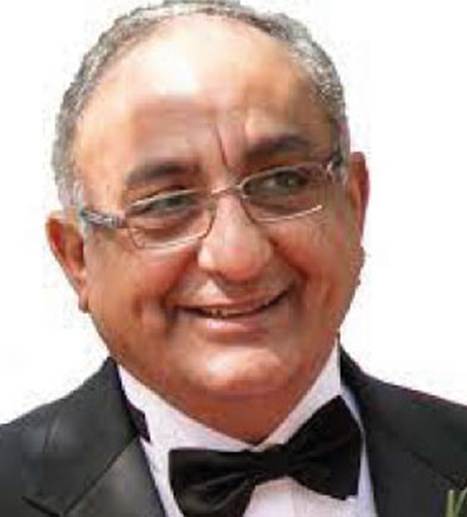
Rashad Bishara, MD
Chair, International Committee
The International Session of the 38th Annual Meeting of the American Venous Forum (AVF 2026) took place on Tuesday, March 3rd, 2026, in Denver. Moderated by Drs. Rashad Bishara and Steve Elias, the session provided a platform for global experts to share groundbreaking research and debate an important topic.
The Keynote: Stenting the Future
The session opened with a keynote lecture by Prof. Cees Wittens, who presented on the future of iliac vein stents. His talk addressed the evolving technology and clinical expectations for stenting in the treatment of chronic venous obstructions.
The Great Debate: Managing Perforator Veins
A highlight of the hour was a spirited debate regarding the treatment of incompetent perforators (IP) in patients with healed or active venous ulcers (C5 and C6) . Three distinct clinical philosophies were represented:
- Alvaro Orrego argued that IPs should be directly targeted and ablated using thermal energy or medical glue.
- Paola Ortiz presented evidence that IPs could be effectively closed as a side product of Ultrasound-Guided Foam Sclerotherapy (UGFS) performed around the ulcer site.
- Lowell Kabnick proposed a more conservative approach, suggesting that IPs could be ignored until deep venous obstructions and superficial reflux were first treated.
The moderators effectively summarized the debate, explaining that all three arguments are valid: IP can be ignored until the superficial and deep venous pathologies are addressed, after which the UGFS can be used to obliterate the distal reflux around the ulcer, and if the ulcer does not heal, residual IP can be targeted individually.
Global Clinical Insights
The latter half of the session was dedicated to recent publications from International Committee members, presented through real-world clinical cases :
Tomasz Urbanek discussed the timing of varicose vein treatment, comparing staged versus simultaneous approaches following saphenous vein ablation .
Anelise Rodrigues shared results from a within-patient trial regarding pigmentation issues after foam or cryo-laser cryo-sclerotherapy .
Alejandro Gonzalez Ochoa presented findings from the VeinStep Observational Study, which examined how obesity affects the quality of life and treatment efficacy in patients with chronic venous disease .
Takaya Murayama concluded the presentations by demonstrating the efficacy of a direct radiofrequency ablation system for treating branch varicosities .
The session concluded with closing remarks that emphasized the importance of international collaboration in standardizing global venous treatments .
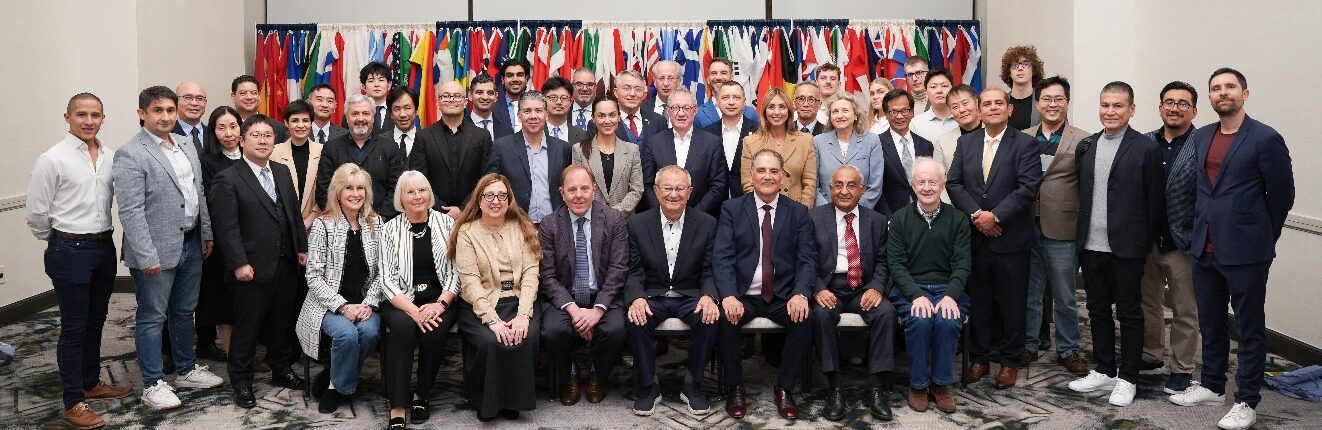
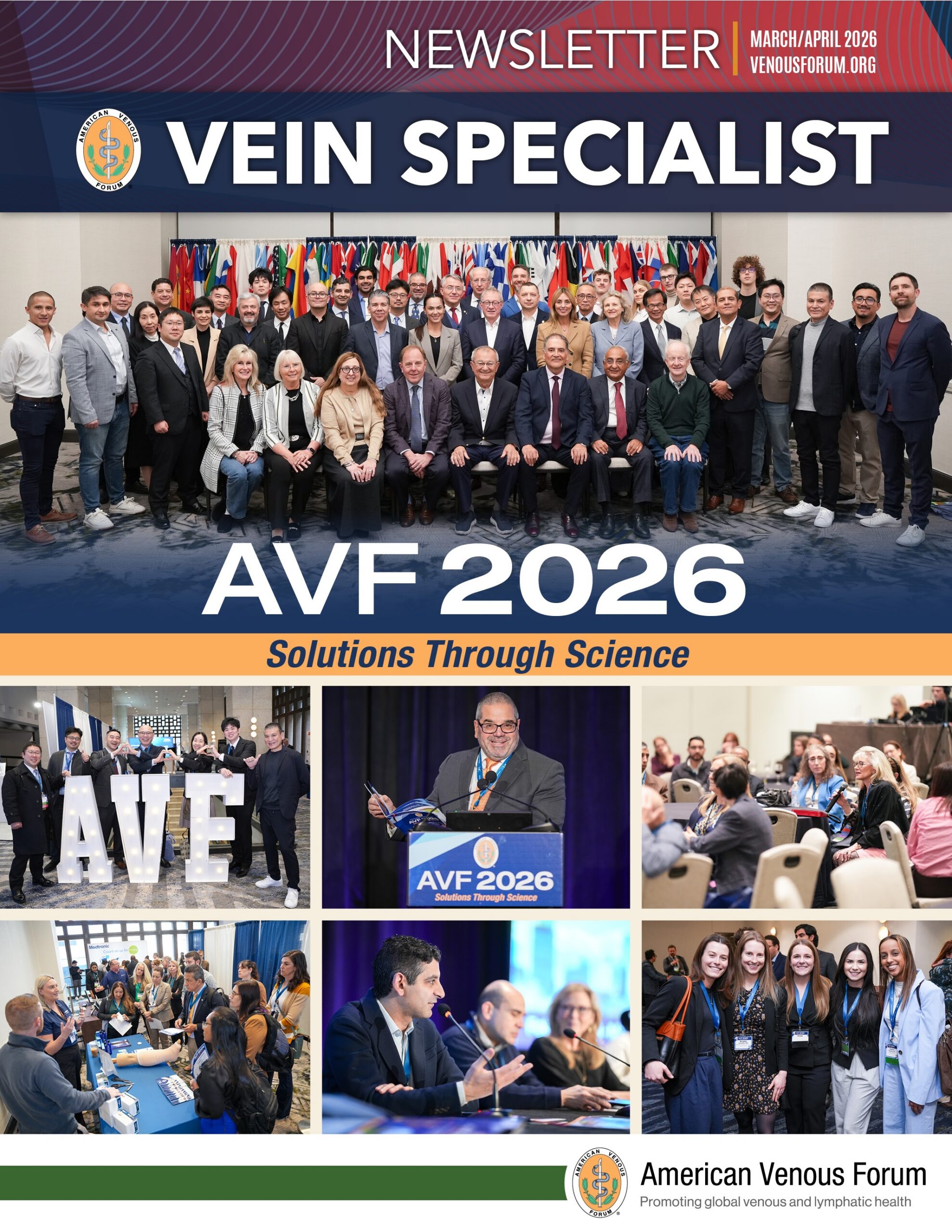
Attendees from around the world pose for a photo.
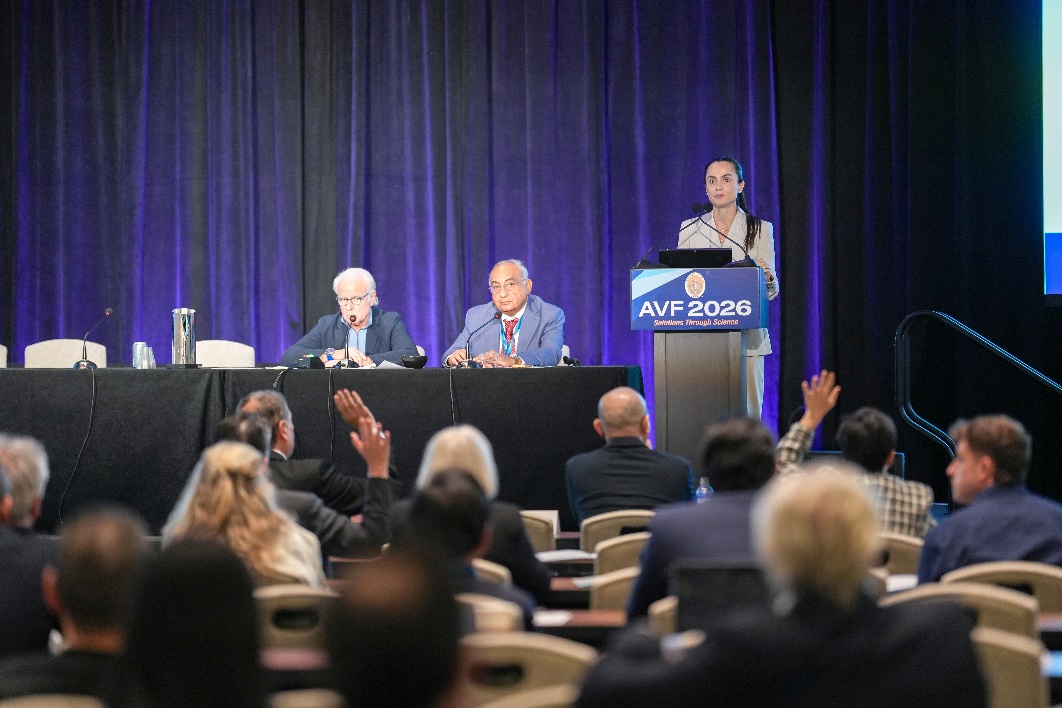
AVF 2026 Explored Diagnostic Imaging
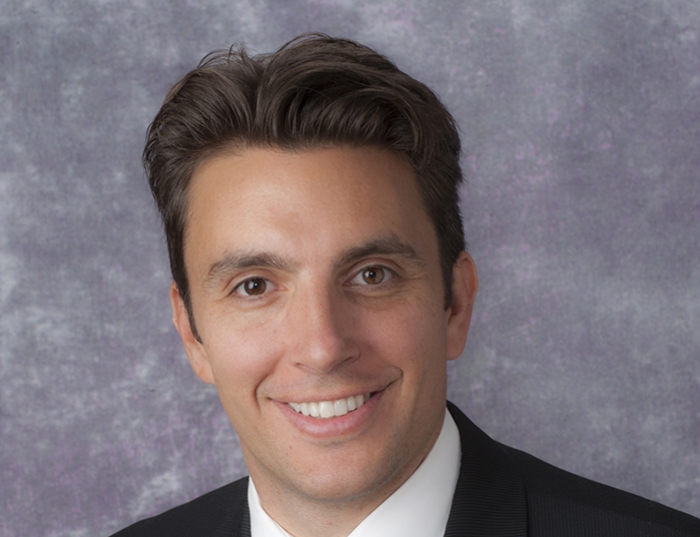
Eric Hager, MD
Member, Newsletter Committee
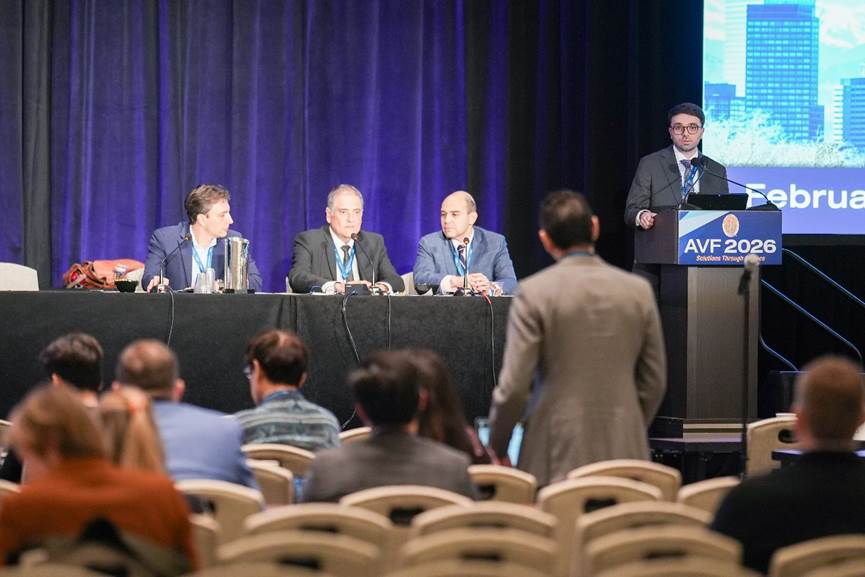
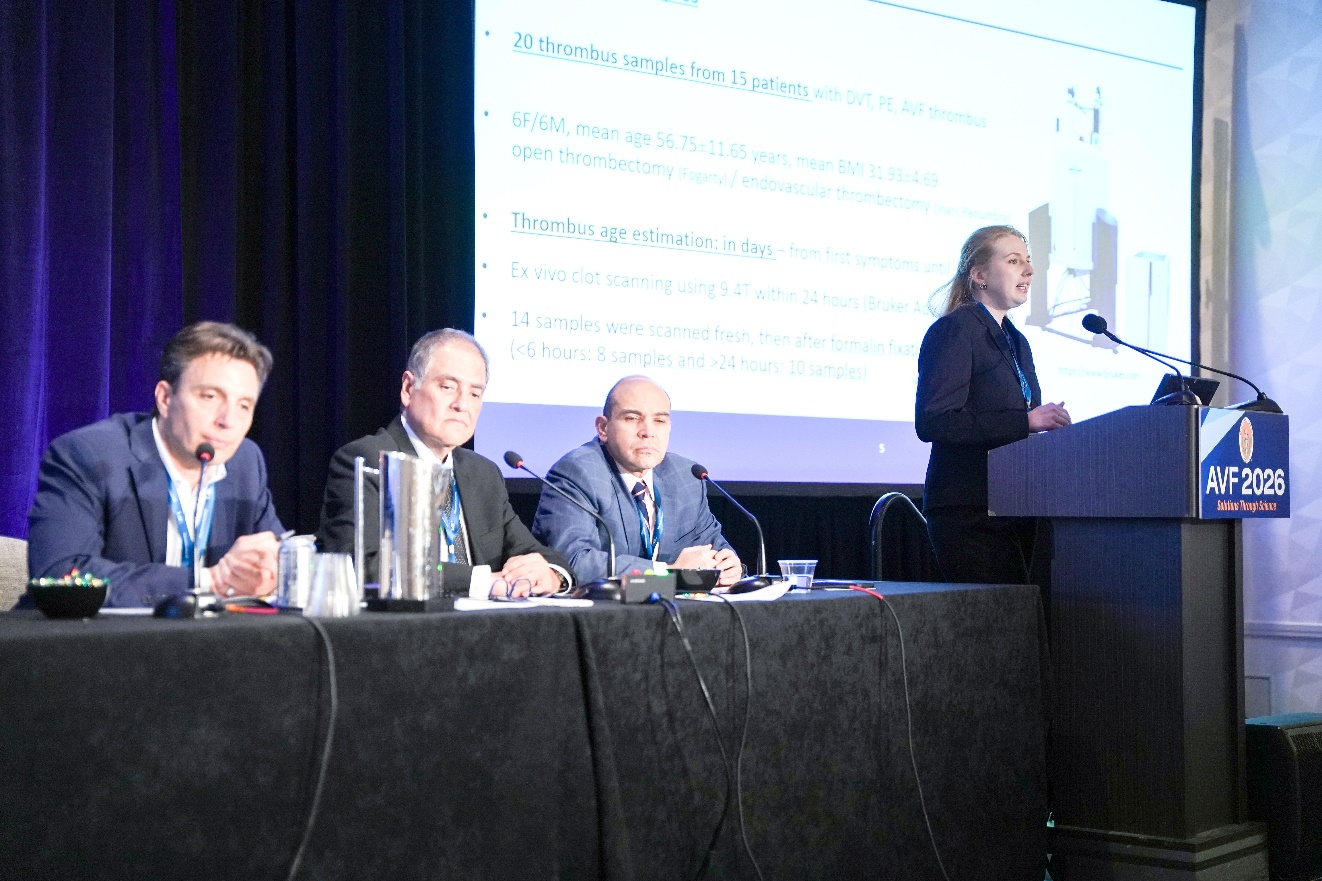
The diagnostic imaging session kicked off with a provocative presentation discussing the utilization of MRI relaxation time biomarkers to identify the chronicity of thrombus. The thrombus was exposed to protons and the time it took to recover their magnetization was recorded. which showed promise in prediction of the duration of the thrombus. This exiting technique may help guide treatment algorithms in the future.
The talks then turned to duplex ultrasound comparison of intravascular ultrasound and standard duplex in the diagnosis of left renal vein compression. Another talk was presented by Dr Mouhammad Halabi on how femoral vein duplex ultrasound can be used to identify underlying cardiac pathology when pulsatility was noted. One of our youngest presenters, Mateo Coppola ( MS-2), presented the cost to a multihospital healthcare system by examining reporting the cost of negative ultrasounds to rule out DVT in the outpatient and emergency room settings. His findings showed that just 1 month of data indicated that more than $400,000 were spent on negative duplex exams.
The next talks, presented by Professor Matthew Tan, discussed rather non-traditional methods for diagnosing superficial disease and venous ulceration. He showed that by examining temperature differences in the skin, his team was able to successfully screen for superficial venous disease. He then presented data from an analysis of fluid from silicone dressings in both healing venous ulcers and non-healing ulcers. These showed that there were certain metabolites with altered regulation patterns, suggesting that further study may help to identify patients who may have recalcitrant ulceration.