
Vein Specialist
2026September/October
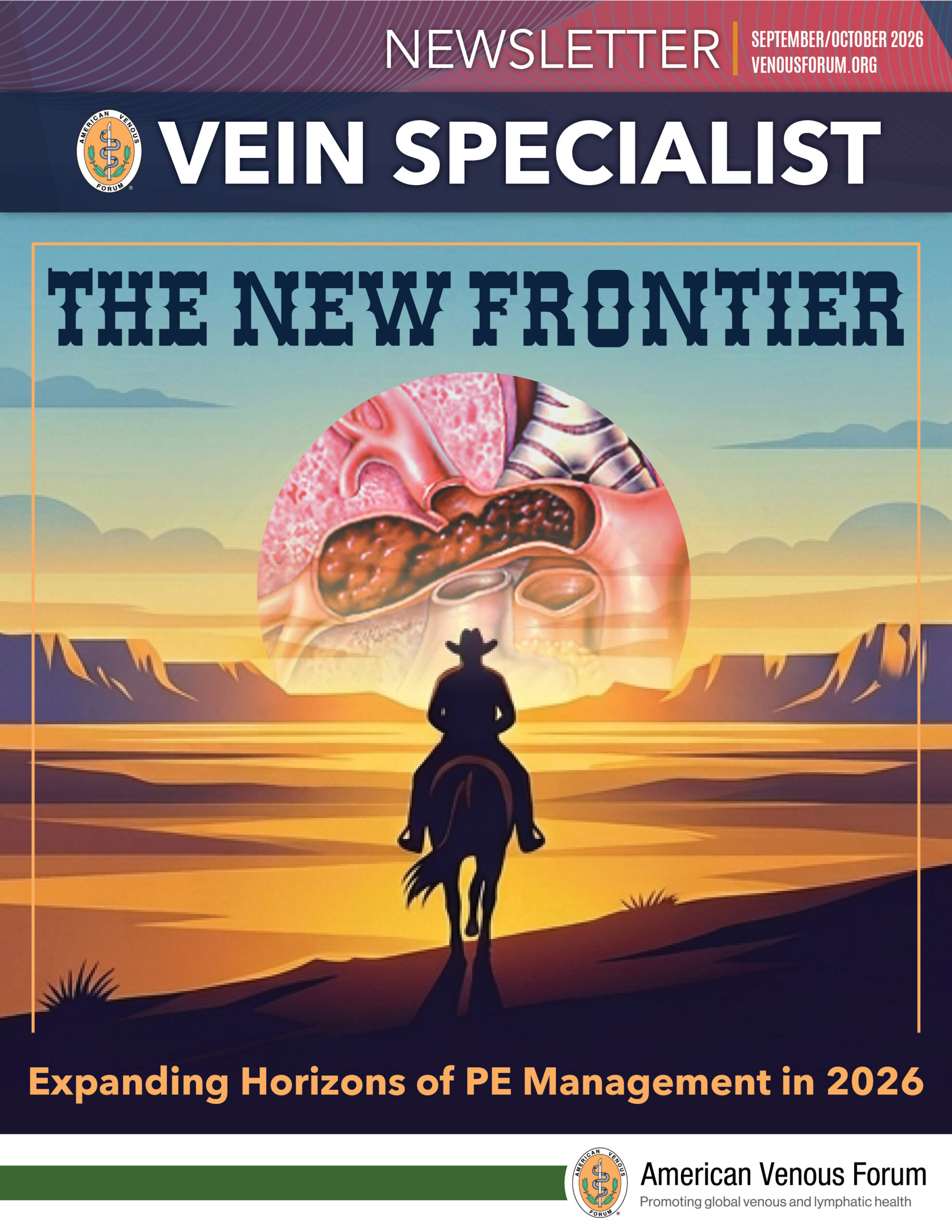
The New Frontier: Expanding Horizons of PE Management in 2026
Get Out the Clot: Closing the Gaps That Cost Lives
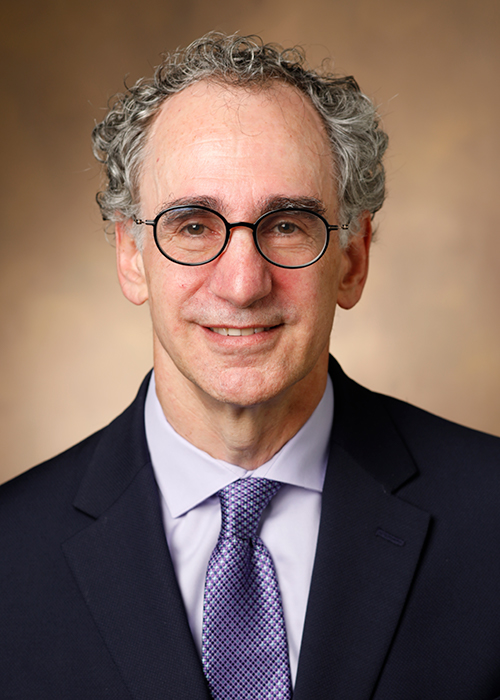
Mark Iafrati, MD
President, The American Venous Forum
The Get Out the Clot campaign launched in 2024 to unite leading organizations and medical experts to address the ongoing gaps in venous thromboembolism (VTE) care. Approximately 900,000 people in the United States are affected by VTE each year, and between 60,000 and 100,000 die from it. Despite advances in prevention and treatment, gaps remain in awareness, diagnosis, and standardized management among both patients and healthcare providers. Over the past two years, the campaign has worked to close those gaps.
A closer look at the disparities in care
A white paper, developed in collaboration with Becker's Healthcare, highlights expert insights around where VTE care falls short and what needs to change. Key themes include earlier recognition of VTE signs and symptoms, greater adoption of evidence-based treatment pathways, and emerging technologies that may improve outcomes for patients with acute clot burden. Read VTE Care at the Crossroads: Today's Challenges and Tomorrow's Breakthroughs here.
Spreading awareness of VTE symptoms
Get Out the Clot is also focused on helping the public recognize VTE symptoms before serious complications occur. This CBS News story follows Elizabeth Simms, a 27-year-old who was 31- weeks pregnant when she suddenly couldn't catch her breath. She initially thought her symptoms were due to her pregnancy, but it turned out to be a life-threatening pulmonary embolism. Thanks to the quick actions of her medical team, who leveraged a computer-assisted vacuum thrombectomy device (CAVT) to remove the blood clot, she made a full recovery. Her story is a powerful reminder that VTE symptoms, like sudden shortness of breath or chest pain, are always worth taking seriously, especially during pregnancy, when the risk is higher.
Get Out the Clot is a collaborative educational initiative uniting American Venous Forum, International Society on Thrombosis and Haemostasis, National Blood Clot Alliance, Penumbra, The PERT Consortium®, and Society for Vascular Medicine. As the campaign continues, its focus remains on promoting earlier recognition, more consistent care pathways, and improved outcomes for patients at risk for VTE.

The white paper features insights from vascular medicine, interventional radiology, hematology, and emergency medicine experts discussing real-world challenges and actionable strategies to elevate venous thromboembolism (VTE) care.
Icing on the Cake – The NIH Doubles Down on the PE-TRACT Trial

Suresh Vedantham, MD
National Principal Investigator
In 2026, progress has been made in pulmonary embolism (PE) management enabled by local multispecialty collaboration, new multisociety guidelines that provide robust guidance on patient selection for advanced PE interventions, and completed or nearly completed industry-sponsored trials evaluating catheter-directed PE therapies (STORM-PE, HI-PEITHO, PEERLESS-2). 1-3 And on June 21, 2026, the investigators of the NIH-sponsored, multicenter, randomized PE-TRACT (Pulmonary Embolism – Thrombus Removal with Adjunctive Catheter-Directed Therapy) trial achieved an impressive collaborative feat in completing enrollment of the trial’s full 500-patient sample a year ahead of schedule. 4
PE-TRACT is distinct from other trials. First, funded only by NHLBI and featuring rigorous methodology, PE-TRACT will be highly credible as a source of unbiased information on CDT outcomes. Second, PE-TRACT is unique in focusing on 3- to 12-month functional outcomes: its dual primary outcome structure includes the 3-month peak oxygen uptake (PVO2) on cardiopulmonary exercise testing (CPET) and the 12-month New York Heart Association class. This scheme will enable assessment of whether CDT indeed prevents “post-PE syndrome,” a key gap in knowledge not elsewhere addressed. Third, reflecting its long-term assessment goal, PE-TRACT enrolled a cohort that encompasses a broad spectrum of patients with intermediate-risk PE, in contrast to studies that enriched their populations for higher clinical severity. By capturing clinical outcome, physiological outcome, and blood specimens, PE-TRACT was designed to enable new insights into the biology of PE, patient recovery, and the development of post-PE syndrome. We look forward to sharing results in late 2027.
Even better, the NIH has recognized the success of the PE-TRACT network and is doubling down! On August 6, 2026, we received the incredible news that the NHLBI is funding the $4 million PE-TRACT EXTEND ancillary study, led by Drs. Akhilesh Sista and Timothy Morris. In EXTEND, participants in the main PE-TRACT trial will have extended clinical follow-up to: (a) develop detailed biological profiles of the different phenotypes of symptomatic chronic thromboembolism; (b) explore the role of CDT in defining post-PE course; and (c) determine the interplay between biological processes, embolic burden, and clinical variables via multivariate analysis of functional genomic data and advanced blood specimen testing. A long-term goal is to enable phenotype-specific therapy via identification of biomarkers and new molecular targets.
So, we have come full circle – what started as a study focused on an intervention is growing into a long-term program to understand post-PE disease processes. Just the way science is supposed to work!
Acknowledgments
The PE-TRACT trial’s development was previously supported by NHLBI grants U34-HL147347 and UG3-HL155798 (to Dr Akhilesh Sista at New York University) and is currently supported by NHLBI grants UH3-HL155798 (to Drs Sunil Rao at New York University and Suresh Vedantham at Washington University in St. Louis) and U24-HL155811 (to Dr Andrea Troxel at New York University). The content in this article is solely the responsibility of the author, not the NHLBI or NIH. The author thanks the NHLBI; the PE-TRACT Trial Steering Committee, site investigators, and staff; and the patients who volunteered to participate.
References
1. Creager MA, Barnes GD, Giri J, et al. 2026 AHA/ACC/ACCP/ACEP/CHEST/SCAI/SHM/SIR/SVM/SVN guideline for the evaluation and management of acute pulmonary embolism in adults: a report of the American College of Cardiology / American Heart Association Joint Committee on Clinical Practice Guidelines. Circulation 2026; 153(12):e977-e1051. Erratum in: Circulation. 2026 Jul 14;154(2):e24.
2. Lookstein RA, Konstantinides SV, Weinberg I, et al. Randomized controlled trial of mechanical thrombectomy with anticoagulation versus anticoagulation alone for acute intermediate-high risk pulmonary embolism: primary outcomes from the STORM-PE Trial. Circulation 2026; 153(1):21-34.
3. Rosenfield K, Klok FA, Piazza G, et al. Ultrasound-facilitated, catheter-directed fibrinolysis for acute pulmonary embolism. N Engl J Med 2026; 394(20):1979-1990.
4. Sista AK, Troxel AB, Tarpey T, et al. Rationale and design of the PE-TRACT trial: a multicenter randomized trial to evaluate catheter-directed therapy for the treatment of intermediate-risk pulmonary embolism. Am Heart J 2025; 281:112–122.
Advancing Evidence in DVT Treatment: CLEANER Vac® and the CLEAR-VIEW XT Study

Pete Stibbs, MD, MSc, MBA
SVP, Global Medical Affairs and Medical Director
Argon Medical Devices
For many patients with deep vein thrombosis (DVT), the immediate diagnosis is only the beginning of a much longer clinical pathway. Factors such as residual thrombus, impaired venous outflow, leg pain, swelling, reduced mobility, and post-thrombotic syndrome can continue to affect quality of life long-term, even after the acute event has been treated. Despite advances in anticoagulation and endovascular care, a clear need remains for data supporting treatment strategies that can rapidly restore flow, minimize treatment burden, and help physicians prevent long-term venous damage in their patients.
Argon Medical Devices is addressing that need through a clinical evidence program for the CLEANER Vac® Thrombectomy System. A retrospective 200-patient multicenter study was recently completed and provided important real-world data that mechanical thrombectomy with CLEANER Vac® can support efficient thrombus removal, frequently in a single treatment session, while limiting reliance on prolonged thrombolytic therapy. This study’s abstract will be formally presented at the CIRSE Annual Congress 2026.
Argon’s prospective CLEAR-VIEW XT study represents the next step in advancing that evidence. This study evaluates thrombus removal, safety, venous patency, symptom resolution, quality of life measures, post-thrombotic syndrome, hospital stay information, adjunctive therapy, and reintervention through 24 months of follow-up.
By prospectively evaluating these outcomes, CLEAR-VIEW XT is intended to provide a more comprehensive understanding of patient outcomes following treatment with CLEANER Vac®.
To learn more about CLEANER Vac®, visit: https://www.argonmedical.com/product/cleaner-vac-thrombectomy-system/ Caution: Federal (USA) law restricts these devices to sale by or on the order of a physician. Prior to use, please refer to the Instructions for Use for complete product indications, contraindications, warnings, and detailed instructions for use.
Investigators interested in learning more about participation opportunities in the CLEAR-VIEW XT study are encouraged to contact Argon Medical Devices or visit: https://clinicaltrials.gov/study/NCT07102160
Korean Edition of the Handbook of Venous and Lymphatic Disorders Published
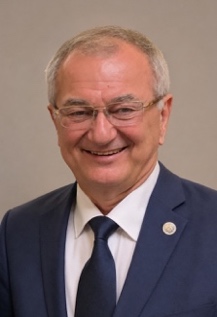
Peter Gloviczki, MD, PhD
Peter Gloviczki, MD, PhD Joe M. and Ruth Roberts Emeritus Professor of Surgery, Mayo Clinic, Rochester, MN Editor, 5th Edition, Handbook of Venous and Lymphatic Disorders
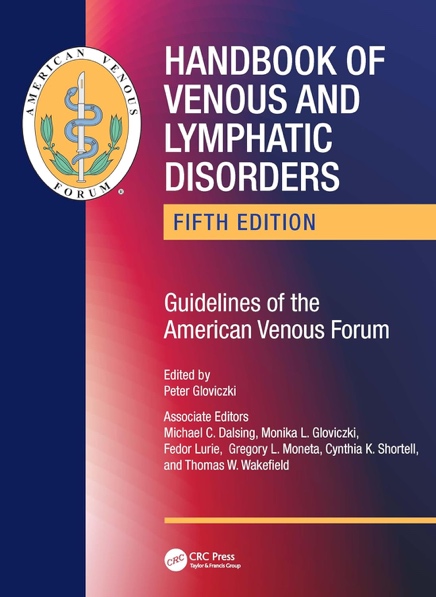
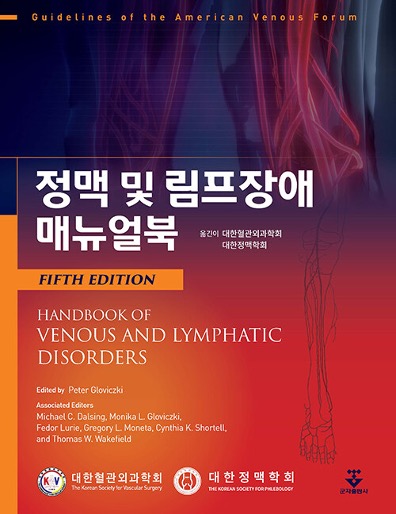
On behalf of the American Venous Forum (AVF) and our editorial team that included Michael M. Dalsing, MD, Monika L. Gloviczki, MD, PhD, Fedor Lurie, MD, PhD, Gregory L. Moneta, MD, Cynthia K. Shortell, MD, and Thomas W Wakefield, MD, I am extremely pleased to announce the recent publication of the Korean-language edition of the fifth edition of the Handbook of Venous and Lymphatic Disorders: Guidelines of the American Venous Forum by Koonja Publishing.
The Korean edition, titled 정맥 및 림프장애 매뉴얼북, was translated through the collaborative efforts of the Korean Society for Vascular Surgery (대한혈관외과학회) and the Korean Society for Phlebology (대한정맥학회).
I extend my sincere gratitude to Professor Sang-Su Lee of the Korean Society for Vascular Surgery and Professor Sun-Cheol Park of the Korean Society for Phlebology for their exceptional leadership and invaluable support in bringing this important project to completion, as well as to all translators, editors, society members, and the Koonja Publishing team who contributed their expertise and dedication to produce such a beautiful volume.
Written by the world’s foremost experts in venous and lymphatic disease—including leaders of the American Venous Forum and internationally recognized authorities—the Handbook has become an essential reference for the clinical evaluation and day-to-day management of venous and lymphatic disorders. This Korean edition will make the latest evidence-based guidelines more accessible to Korean physicians, surgeons, trainees, and other healthcare professionals. Consistent with one of the AVF’s core values—the provision of high-quality education in venous and lymphatic disease—its publication also represents an important step toward strengthening international collaboration and advancing patient care.
AVF Upper Extremity DVT Guideline Sets Record for Downloads

Ruth Bush, MD, JD, MPH, FACS, DFSVS
Past President, The American Venous Forum
The American Venous Forum’s “Clinical Practice Guideline on the Care of Patients with Upper Extremity Deep Venous Thrombosis” was published in March 2026 in the Journal of Vascular Surgery: Venous & Lymphatic Disorders. It has already surpassed 9,000 downloads across both ScienceDirect and the jvsvenous.org site. Such strong interest demonstrates the importance of creating practical, evidence-based guidance for this critical area of venous care.
Development was led by Rafael D. Malgor, MD, MBA, on behalf of the AVF Guidelines Oversight Committee. The multidisciplinary guideline provides evidence-based recommendations addressing the evaluation and management of upper extremity DVT, including venous thoracic outlet syndrome, catheter-associated thrombosis, and cancer-associated disease.
This early readership milestone highlights the clinical relevance of the guideline and the broader impact of AVF’s commitment to developing rigorous, accessible guidance that helps translate the best available evidence into everyday patient care.
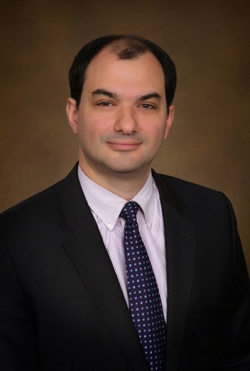
Congratulations to Dr. Malgor and the entire writing group on this important achievement.
Click here to view the guidelines: https://www.jvsvenous.org/article/S2213-333X(26)00021-1/fulltext
AVF Staff Get Stronger Together at Leadership Retreat

Allie Sherrill
Managing Editor, Vein Specialist
Communications Support, The American Venous Forum
In August, AVF staff came together for a day of connection, collaboration, and leadership development during the AVF Leadership Retreat: Stronger Together. The retreat brought together staff and invited experts for engaging sessions focused on strengthening leadership, understanding organizational culture, navigating industry trends, and exploring how emerging technologies like AI can help the AVF work smarter while keeping human expertise and judgment at the center.
From leadership exercises and culture mapping to discussions around the future goals of the AVF, the retreat provided valuable perspective and practical tools to help move the organization forward. The day wrapped up with dinner and continued conversation—a fitting end to a day centered on the idea that we are, indeed, Stronger Together.
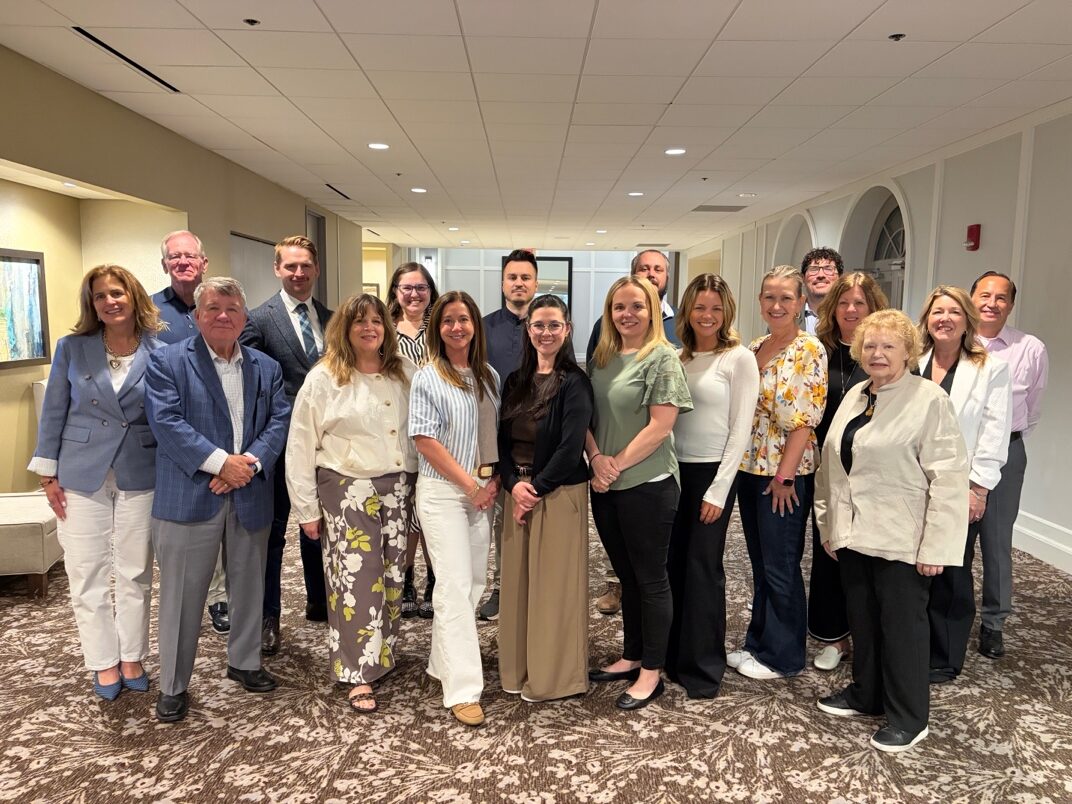
AVF Team at the Stronger Together Leadership Summit.
A special thank you to our outstanding speakers for sharing their time, expertise, and insights during the AVF Stronger Together Leadership Retreat: Justin Ahrens, Sherry Budziak, Dr. Mark Iafrati, Sue O’Sullivan, Ken Slaw, Dan Stevens, and Marty Sylvain. Your perspectives and engaging sessions made the day both meaningful and inspiring.
We also extend our sincere thanks to our sponsors for helping make this event possible. Your support allows the AVF to invest in our staff, strengthen our organization, and continue moving our mission forward.

Member Spotlight: Suzanna Fitzpatrick, DNP, PhD (c), CRNP
AVF Membership Committee
Welcome back to our Member Spotlight series, a space dedicated to celebrating the people who make the American Venous Forum such a vibrant and impactful community.
Meet Dr. Suzanna Fitzpatrick!

Suzanna Fitzpatrick, DNP, PhD (c), CRNP in her 1999 5-speed Cabrio.
Q: Outside of venous practice, what other passionate interest(s) do you have?
A: Running — I run a 10-miler 20 times every year. Coaching the 10U softball team. Reading 100 books a year (all trash, but so good). Being with my family. Seeing my friends often, cooking something delicious while my friends sit in the kitchen with me having wine and I serve them yummies, and being by the water.
Q: What is your most treasured physical possession?
A: The rocking horse my parents made for me when I was 1 — my dad built it and my mom painted it. Both of my kids rocked on it, too. Now that my parents are gone, it reminds me of the love they shared for me. Even though they were divorced when they made it, they always orbited around me.
Q: What is your greatest extravagance?
A: My 1999 5-speed Cabrio that my husband bought online for $1,500. I really wanted it, but never would have bought it myself, because I try to only buy with purpose. But I love it. The picture is me driving it. No one will steal it because they can’t drive a stick — and I get huge smiles from everyone when they are in it, too.
Q: What do you value most in your friends?
A: Loyalty.
Q: What is your motto?
A: Work hard, play harder.
Welcome New AVF Members!
American Venous Forum
July/August 2026
| Member Name | Country |
|---|---|
| Samah Ahmadieh, MD | United States |
| Michelle Bauhaus, Np | United States |
| Seungjae Byun, MD, PhD | Korea, Republic of |
| Shamna Haris, MD | United States |
| Kenzie Howard, NP, DNP | United States |
| Ahmed Imami, BA | United States |
| Rena Israel, PA | United States |
| Matthew Jervis, BS | United States |
| Salvador Jimenez, MD | Mexico |
| Alexandria Kaskewicz, NP | United States |
| Marceline Kougbani-Sebou, NP, ARNP | United States |
| Alvin Liu, BA | United States |
| Bianca Lopes, MD | Brazil |
| Clovis Manley, MD | United States |
| Khusrow Niazi, MD | United States |
| Alexia Paganotti, MD | United States |
| Sally Park, DO | United States |
| Berk Rasheed, MSc | United States |
| Tatsuro Sato, MD | Japan |
| Joseph Schnier, MD | United States |
| Daniel Shen, BA | United States |
