
Vein Specialist
2026September/October
The New Frontier: Expanding Horizons of PE Management in 2026

Table of contents
Table of Contents
Message from the Editor
Steve Elias, MD
The 2026 AHA/ACC Acute Pulmonary Embolism Guideline: What Venous Specialists Need to Know
Daniella Kadian-Dodov, MD
The Role of the Vascular Surgeon/Venous Specialist in the PE Response Team
Natalie Sridharan, MD and Rabih Chaer, MD
Advanced Practice Provider Leadership Strengthens the PERT Program through Quality, Coordination, and Systemwide Engagement
Kristan Probeck, NP
Pulmonary Embolism Intervention: Experimental or Experiential?
Misaki M. Kiguchi, MD and Steven Abramowitz, MD
DEFIANCE: Advancing the Evidence for Mechanical Thrombectomy in Iliofemoral DVT
Adam Gwozdz, MD, PhD, MBA
Evolution in the Management of Complex and Advanced Presentations of Acute Pulmonary Embolism: Clot-in-Transit and VA-ECMO
Charles B. Ross, MD, Andrew J. P. Klein, MD and Christian Bermudez, MD
Sequelae of PE and PE Interventions
Vic Tapson, MD, FCCP, FRCP
Biomarkers to Predict Thromboembolic Pulmonary Hypertension and Refine Patient Selection for Intervention
Elizabeth Andraska, MD, MSc
Beyond the Clot: Expanding How We Evaluate Success in PE Care
James F. Benenati, MD, FSIR
Identifying the More Vulnerable Patient in Acute Pulmonary Embolism
Robert Attaran, MD
Current Technologies for the Treatment of Pulmonary Embolism
Adam Reichard, MD, MS, RPVI
New Trials and Recent Evidence on PE Management
Patrick E. Muck, MD, RVT, FACS
Get Out the Clot: Closing the Gaps That Cost Lives
Mark Iafrati, MD
Icing on the Cake – The NIH Doubles Down on the PE-TRACT Trial
Suresh Vedantham, MD
Advancing Evidence in DVT Treatment: CLEANER Vac® and the CLEAR-VIEW XT Study
Pete Stibbs, MD, MSc, MBA
Korean Edition of the Handbook of Venous and Lymphatic Disorders Published
Peter Gloviczki, MD, PhD
AVF Upper Extremity DVT Guideline Sets Record for Downloads
Ruth Bush, MD, JD, MPH, FACS, DFSVS
AVF Staff Get Stronger Together at Leadership Retreat
Allie Sherrill
Member Spotlight: Suzanna Fitzpatrick, DNP, PhD (c), CRNP
AVF Membership Committee
Welcome New AVF Members!
American Venous Forum
EDITOR-IN-CHIEF
Steve Elias, MD
EXECUTIVE EDITOR
John Forbes, MBA
MANAGING EDITOR
Allie Sherrill
COVER ARTIST
Christine Rataj
PUBLICATION DESIGNER
Anthony Eaves
Message from the Editor

Steve Elias, MD
President Elect, The American Venous Forum
Chair, AVF Newsletter Committee
Sweats
Read this issue of Vein Specialist wearing anything you want: jeans, T-shirt, shirt and tie, scrubs, or sweatpants. And if you want to be fashionable and hip and cool you will wear a pair of Free City sweatpants. Why? Because everyone in the Hamptons is wearing them everywhere. They are just sweatpants. They retail between $168 and $298 depending on how much money you want to part with. How did they become so popular again? They were popular in the early 2000s when Madonna, Gwyneth Paltrow, and Miley Cyrus wore them as a statement: we won’t dress up for you. But now they are everywhere. Pilates classes, lunch, dinner, the beach, and just hanging around. As far as my research told me, they are just sweatpants. Every day, run-of-the-mill sweatpants with a logo on them. Does this qualify for charging $168 and more? The pandemic really catapulted them into the de riguer sweat of choice of the rich and famous sitting around not doing that much. And then we all followed. Reverse weave Champion sweatpants cost about $50 online. And they are really good sweatpants. But nobody rich and famous is wearing them to lunch, Pilates, or shopping in the Hamptons. So, they don’t get the hype of Free City sweats.
And you don’t get the hype in Vein Specialist. We don’t follow the rich and famous with their superfluous trends. We stick to what you really need to know. This entire issue is dedicated to the very trendy topic of pulmonary embolus. A lot of new technology has evolved over the last couple of years to manage the problem. And a number of studies now confirm that treating this entity with something more than “anticoagulation is beneficial to patients in the short-term and the long-term.” Our team of experts has produced a series of articles about all aspects of the management of pulmonary embolus. This is one of the most comprehensive issues that we have ever had on the subject because it is so fresh and new and becoming more mature as data are collected. Not all of us treat pulmonary embolus, but it is certainly an entity we need to be aware of and make sure we know the right people to get the patient to when necessary.
And if you want to read this issue in a pair of Free City sweatpants, go ahead and do it. I’m sure they’ll be comfortable enough, but you probably can find some other sweats that you already own that are just as comfortable and you won’t need to lay out any extra money. Pulmonary embolus management and Free City sweats do have something in common however: they have their passionate followers. We hope this issue gives you the insight and some passion for the management of this problem. And I’m going to hold off reading the issue again until I get myself a pair of XS Free City sweats to wear and see what it’s all about. Why not? I can always return them. I’ll let you know if they’re worth it.

The 2026 AHA/ACC Acute Pulmonary Embolism Guideline: What Venous Specialists Need to Know

Daniella Kadian-Dodov, MD
Associate Professor of Medicine, Vascular Medicine
Mount Sinai Fuster Heart Hospital
Icahn School of Medicine at Mount Sinai
The 2026 multi-societal guideline for the evaluation and management of acute pulmonary embolism (PE) provides a contemporary framework spanning diagnosis, risk assessment, treatment, and post-PE follow-up.1 The most consequential change is the introduction of the AHA/ACC Acute Pulmonary Embolism Clinical Categories ranging from Category A– representing asymptomatic or incidentally detected PE, through Category E– representing established cardiopulmonary failure (Figure 1).
The new framework moves beyond the traditional terms “massive,” “submassive,” and “low-risk PE” used in the 2011 American Heart Association scientific statement, while adding granularity to the 2019 European Society of Cardiology risk classification (Figure 2).2,3 Prior systems grouped patients with substantial clinical heterogeneity and could inadvertently overemphasize radiographic clot burden. The 2026 categories incorporate clinical severity, right ventricular function, biomarkers, hemodynamic compromise, and a respiratory modifier intended to capture hypoxemia and respiratory compromise more precisely. The practical message is to treat the patient’s physiology and trajectory, not the appearance of clot alone.
Anticoagulation remains the foundation of therapy, with direct oral anticoagulants preferred over vitamin K antagonists in eligible patients. Selected patients in Categories A and B many be managed as outpatients when validated tools support a low risk of adverse events and reliable follow-up is available. Patients in Categories C through E generally require hospitalization with monitoring and treatment intensity matched to clinical severity.
This guideline does not support routine intervention for all patients with right ventricular dysfunction or biomarker elevation. Anticoagulation and surveillance remain central in Category C, while advanced therapies become more relevant for patients in Categories D and E. Multidisciplinary management teams (eg, PE Response Teams–PERTs) can facilitate individualized decisions based on clinical trajectory, bleeding risk, and institutional availability and expertise.
Finally, a PE case does not end at discharge. Early medication follow-up with a care provider, reassessment at 3 months, and continued monitoring for persistent symptoms and functional impairment are essential components of longitudinal care.
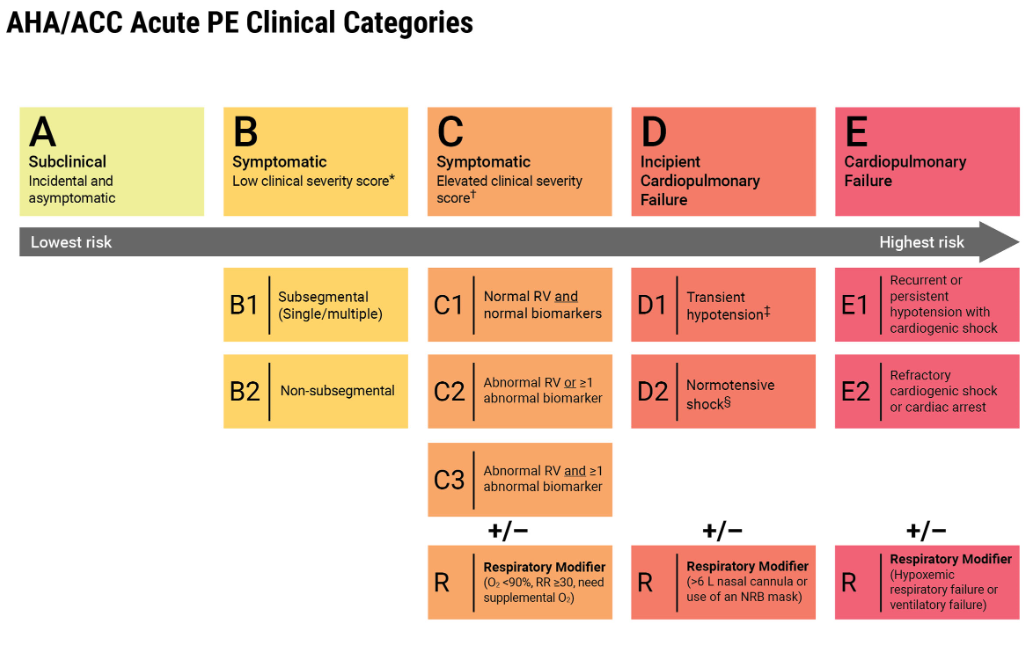
Figure 1. AHA/ACC Acute PE Clinical Categories. When patients meet the respiratory modifier status criteria, add “R” to the category description (eg, C3R, D2R). Reproduced from the 2026 multi-societal guideline for the evaluation and management of acute pulmonary embolism.1
*Low Clinical Severity Score includes PESI≤85 or sPESI=0 or BOVA<4.
†Elevated Clinical Severity Score includes PESI>85 or sPESI≥1 or BOVA>4.
‡Systolic blood pressure <90 or decrease >40 mm Hg lasting <15 min or responding to IV fluids. §Any: Lactate >2 mmol/L, acute kidney injury, urine output <0.5 mL/kg/hr, mental status change, cardiac index <2.2 L/min/m2, mean arterial pressure <60 mm Hg, increased shock score/stage (SCAI stage, CPES score). ACC indicates American College of Cardiology; AHA, American Heart Association; CPES, Composite Pulmonary Embolism Shock; IV, intravenous; NC, nasal cannula; NRB, nonrebreather; O2, oxygen; PE, pulmonary embolism; PESI, Pulmonary Embolism Severity Index; RR, respiratory rate; RV, right ventricle; and sPESI, simplified PESI.
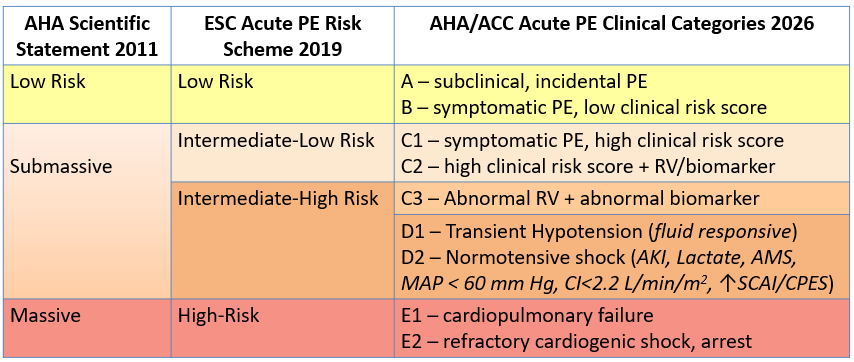
Figure 2. Progression of Pulmonary Embolism Classification Over Time
References:
1. 2026 AHA/ACC/ACCP/ACEP/CHEST/SCAI/SHM/SIR/SVM/SVN Guideline for the Evaluation and Management of Acute Pulmonary Embolism in Adults: A Report of the American College of Cardiology/American Heart Association Joint Committee on Clinical Practice Guidelines. Circulation 2026;153(12):e977-e1051.
2. 2019 ESC Guidelines for the diagnosis and management of acute pulmonary embolism developed in collaboration with the European Respiratory Society (ERS). Eur Heart J 2020;41:543-603.
3. Management of Massive and Submassive Pulmonary Embolis, Iliofemoral Deep Vein Thrombosis, and Chronic Thromboembolic Pulmonary Hypertension: A Scientific Statement from the American Heart Association. Circulation 2011;123(16):1788-1830.

The Role of the Vascular Surgeon/Venous Specialist in the PE Response Team

Natalie Sridharan, MD
Member, AVF Newsletter Committee

Rabih Chaer, MD, MS
Member, AVF Newsletter Committee
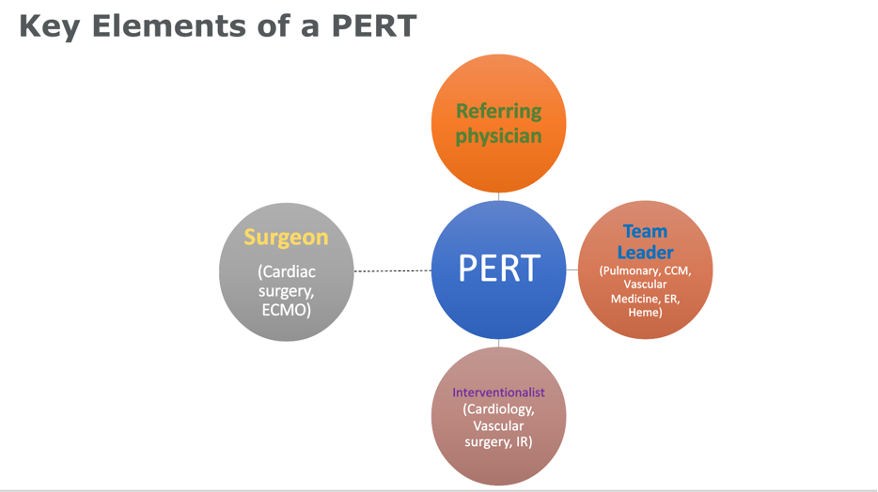
Pulmonary Embolism response teams (PERTs) are created to facilitate rapid and multidisciplinary management of intermediate- and high-risk pulmonary embolism (PE). They can help mobilize resources quickly, drive individualized treatment, and facilitate much-needed research in this field.
PE remains a highly lethal problem, with mortality rates relatively unchanged in recent times. Transitions of care between emergency room physician, critical care, pulmonary medicine, hematology, and possibly an interventionalist (whether cardiac surgery, vascular surgery, interventional radiology, or interventional cardiology) can be difficult to coordinate and lead to fragmented care. PERTs are valuable for a number of reasons. They facilitate consensus-based treatment plans by experts in medical, surgical, and interventional management strategies which is essential in this pathology where high-quality data often lags behind technological advances to intervene on PE. They also leverage multiple specialties’ clinical expertise and help mitigate bias that one group may have for a treatment type. 1
Data suggest that the presence of a PERT increases the number of patients receiving a full PE workup including biomarkers and echocardiography. The presence of a PERT also leads to more specialty consultations and more advanced therapies such as catheter-directed interventions.2
Starting a PERT can be challenging, but many resources are available that suggest best practices for doing so. The make-up of a PERT will vary by institution and local expertise, but in general should incorporate as many key stakeholders as possible. Not all stakeholders will be engaged at every PERT activation but should be aware of the algorithm and ready to assist when called upon. 1,3,4 Vascular surgeons are well positioned to start a PERT in their home institutions.
PERT consortium guidelines suggest that established PERTs should be able to meet the following criteria: Ability to rapidly assess and provide treatment for patients with acute pulmonary embolism; a formal mechanism to exercise a full range of medical, surgical, and endovascular therapies; provide appropriate multidisciplinary follow‐up of patients; and a willingness to collect, evaluate, and share data regarding the effectiveness of treatment rendered.
Frequent engagement of key stakeholders as well as administration is necessary during the design phase of a PERT. The true establishment of a PERT is more of an iterative process that involves creation of an algorithm, roll-out, and a commitment to continuous quality improvement and refining the process as issues arise, which are inevitable.
Vascular surgeons are the experts of the vascular system – both arterial and venous. Remaining not only involved, but at the forefront, of the management of PE is important for the well-rounded vascular program. In addition, patients with PE often have other venous disorders including DVT and, in the long term, superficial and deep venous disease and post-thrombotic syndrome, so remaining involved in their care is important for the full-spectrum vascular surgery program.
The role of vascular surgeons in the innovation of minimally invasive approaches to treat PE has been well established for more than 50 years since Dr. Greenfield introduced the pulmonary embolectomy catheter and the vena cava filter (ref). Vascular surgeons have been leaders in clinical research (sunset PE ref) and have contributed to almost all clinical IDE and NIH-sponsored trials in the interventional management of PE. In keeping with the adage that “the needs of the patient come first,” this mandates the inclusion of the ready availability and involvement of vascular surgeons in PERTs.
References:
1. Rosovsky R, Zhao K, Sista A, Rivera-Lebron B, Kabrhel C. Pulmonary embolism response teams: Purpose, evidence for efficacy, and future research directions. Res Pract Thromb Haemost 2019;3(3):315-330. DOI: 10.1002/rth2.12216.
2. Hussein EA, Semaan DB, Phillips AR, et al. Pulmonary embolism response team for hospitalized patients with submassive and massive pulmonary embolism: A single-center experience. J Vasc Surg Venous Lymphat Disord 2023;11(4):741-747 e2. DOI: 10.1016/j.jvsv.2023.03.002.
3. Bejjani A, Khairani CD, Campia U, Piazza G. Pulmonary Embolism Response Teams: Theory, Implementation, and Unanswered Questions. J Clin Med 2022;11(20). DOI: 10.3390/jcm11206129.
4. Porres-Aguilar M, Rosovsky RP, Rivera-Lebron BN, et al. Pulmonary embolism response teams: Changing the paradigm in the care for acute pulmonary embolism. J Thromb Haemost 2022;20(11):2457-2464. DOI: 10.1111/jth.15832.

Advanced Practice Provider Leadership Strengthens the PERT Program through Quality, Coordination, and Systemwide Engagement

Kristan Probeck, NP
Member, AVF Newsletter Committee
Advanced Practice Providers (APPs) serve a critical leadership function within Stony Brook Medicine’s Pulmonary Embolism Response Team (PERT), supporting the program’s operational integrity, quality oversight, and multidisciplinary coordination. Their nonclinical contributions ensure that pulmonary embolism (PE) care remains standardized, datadriven, and aligned with institutional and national expectations for highreliability clinical programs.
APPs lead quality reporting for the PERT, abstract data for the Pulmonary Embolism Research Collaborative (PERC) Registry and Stony Brook’s internal database, and maintain REDCap infrastructure for research and quality initiatives. They coordinate and facilitate PERT meetings, manage actionitem followthrough, and oversee structured case review processes, including mortality and morbidity discussions.
Their role includes comprehensive program coordination across the emergency, intensive care, interventional radiology, vascular surgery, cardiology, and cardiothoracic surgery departments, as well as collaboration with sister hospitals to support a reliable transfer pathway for PE patients. APPs maintain clinical standardization by updating note templates, developing and revising policies, and providing regular reporting to hospital administration.
In support of research, APPs contribute to IRB submissions, data collection, and manuscript development, advancing Stony Brook’s efforts toward designation as a PERT Center of Excellence. They also deliver ongoing institutionwide education to reinforce best practices in PE recognition, risk stratification, and escalation pathways.
APPs function as the clinical and operational backbone of the PERT, linking rapid emergency evaluation with coordinated multidisciplinary decisionmaking and seamless bedside execution. They frequently serve as the initial responder, conducting rapid assessment and risk stratification. They organize team communications, facilitate conference calls, synthesize and present the case, and document recommendations as well as the treatment plan. Their role ensures continuity—translating multidisciplinary guidance into realtime clinical action, supporting patient education, guiding discharge planning, and maintaining structured longterm followup across the care continuum.
Through these coordinated efforts, APPs provide essential leadership that strengthens the PERT’s infrastructure, enhances multidisciplinary collaboration, and supports continuous improvement in pulmonary embolism care.
Pulmonary Embolism Intervention: Experimental or Experiential?

Misaki M. Kiguchi, MD
Secretary, AVF Executive Committee
Associate Professor, Department of Surgery
Program Director, Department of Vascular Surgery
Director, MedStar Health Vein Centers

Steven Abramowitz, MD
Vascular Surgery, MedStar Washington Hospital Center
Pulmonary embolism care has gone through a period of remarkable innovation. As large-bore mechanical embolectomy, catheter-directed thrombolysis, and multidisciplinary pulmonary embolism response teams become increasingly integrated into clinical practice, physicians must determine not only what can be done, but what should be done, for which patients, and on the basis of what evidence.
At AVF 2027, a session entitled Pulmonary Embolism Intervention: Experimental or Experiential? will bring these questions to the forefront through a series of focused, provocative debates. Rather than offering a single prescribed approach, the session will place competing interpretations of the evidence side by side and invite the audience to examine the assumptions shaping contemporary PE care.
Among the topics to be discussed, a highlighted debate will include whether procedural adoption and care algorithms for pulmonary embolisms should be driven primarily by mortality and major morbidity, or whether patient-reported outcomes—including functional recovery, quality of life, and persistent symptoms— should play a more prominent role?
The second portion of the session is Obstructive Iliac Vein Interventions: Evidence versus Enthusiasm. The first debate will consider whether stenting nonthrombotic iliac vein lesions (NIVL) in patients with POTS is indicated to provide symptomatic relief, or whether venous interventions for the management of POTS are not indicated. The second debate will address whether NIVLs uncovered during iliofemoral thrombectomy for acute DVT should routinely be stented, or whether intervention should instead be staged. Together, these debates will examine the clinical evidence behind increasingly adopted venous interventions and challenge the audience to distinguish established benefit from procedural enthusiasm.
Scientific progress depends on thoughtful disagreement. By challenging prevailing assumptions and clarifying where evidence ends and experience begins, this session will help clinicians better evaluate emerging therapies and make more informed, patient-centered decisions.
DEFIANCE: Advancing the Evidence for Mechanical Thrombectomy in Iliofemoral DVT

Adam Gwozdz, MD, PhD, MBA
Medical Director, Stryker Peripheral Vascular
The treatment of deep vein thrombosis (DVT) continues to evolve, yet an important clinical question remains: Does early thrombus removal improve outcomes compared with anticoagulation alone?
The DEFIANCE trial was designed to help answer that question.
DEFIANCE is a prospective, multicenter, randomized controlled trial comparing the ClotTriever System plus standard anticoagulation to conservative medical management with anticoagulation alone in patients with symptomatic unilateral iliofemoral DVT. Approximately 300 patients will be randomized 1:1, and outcomes will be followed for six months.
DEFIANCE is particularly important because it focuses on patient-centered clinical outcomes rather than procedural success alone. The primary endpoint uses a hierarchical “win ratio” that prioritizes treatment failure or escalation, followed by post-thrombotic syndrome (PTS) severity as measured by the Villalta scale at six months. The study also incorporates independent adjudication, core laboratory assessment of duplex ultrasound, and blinded assessment of PTS severity.
For clinicians caring for patients with proximal DVT, these questions matter. Anticoagulation prevents thrombus propagation and embolization, but it does not actively remove existing thrombus. At the same time, previous randomized studies of thrombolytic-based strategies have been limited by comparatively low rates of technical procedural success, with significant residual thrombus persisting in treatment arms despite the added bleeding risk. (REF 1 and 2).
Mechanical thrombectomy offers an alternative approach: removing thrombus without the use of thrombolytic drugs. Observational data, including the CLOUT registry, have provided encouraging evidence of safety, thrombus removal, and longer-term patient outcomes (REF 3). DEFIANCE builds on this foundation by providing randomized evidence directly comparing mechanical thrombectomy with anticoagulation alone.
As venous specialists, we need high-quality evidence to guide patient selection and treatment decisions. DEFIANCE is an important step toward determining whether an early interventional strategy can provide meaningful clinical benefits for patients with iliofemoral DVT.
The goal is simple: generate evidence that helps us make better treatment decisions for our patients.
